
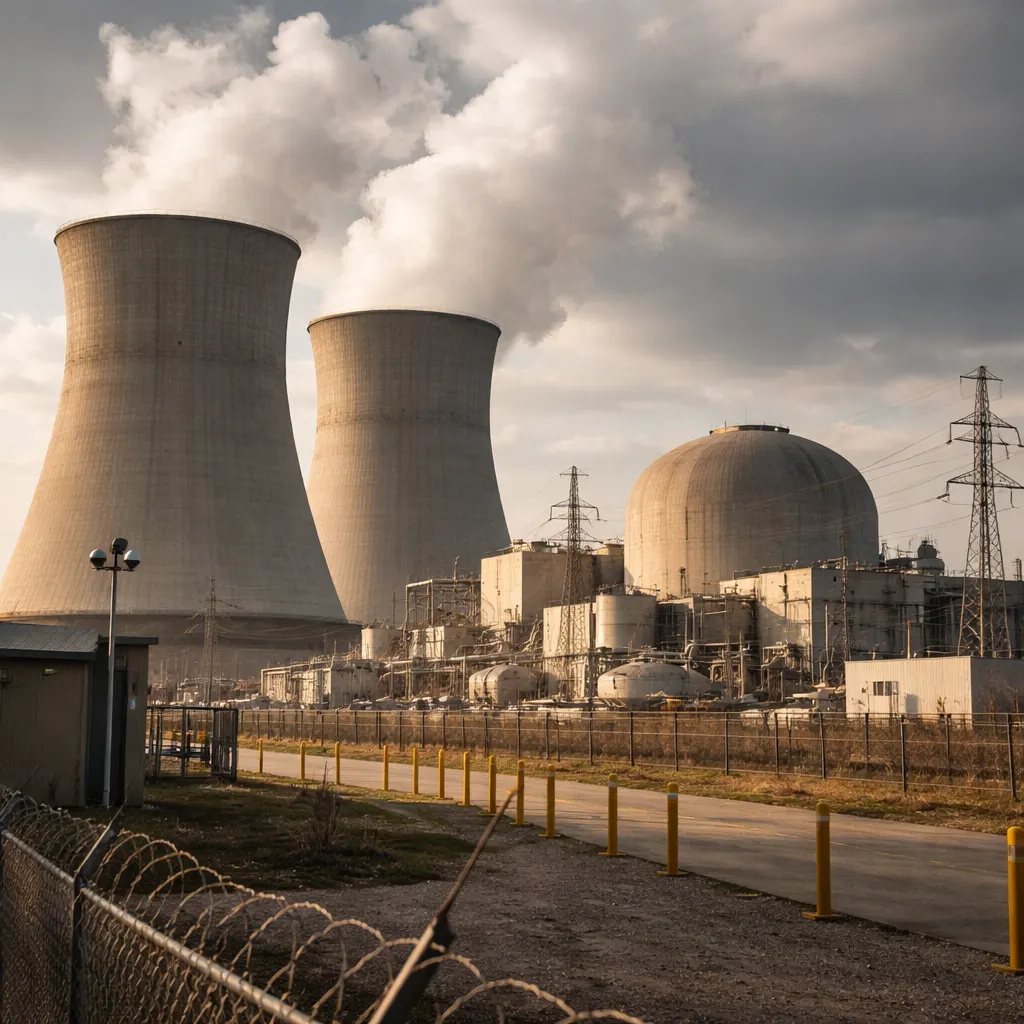
While more than 80 nuclear reactors are currently under construction around the world, not one is being built in America, according to a new report published today by the American Enterprise Institute. Written by Mark Jamison, a nonresident senior fellow at AEI, the report argues that the United States is on the verge of two AI-driven revolutions—one in business and one in energy—but neither will succeed without abundant electricity. The timing couldn't be more critical: AI companies are racing to build data centers that consume electricity in volumes never seen before, while manufacturing, electric vehicles, and advanced computing are also driving unprecedented power demands.
The report highlights a stark contrast in nuclear construction globally versus domestically. More than 80 reactors are under construction worldwide, yet the US has none in active construction. The country's most recent nuclear experience came at Georgia's Vogtle plants, where Vogtle 3 suffered delays, cost overruns, and supply-chain disruptions, while Vogtle 4 benefited from lessons learned and dramatically lowered costs. Meanwhile, major technology companies are already moving to secure nuclear power: Microsoft has agreed to purchase power from a restarted Three Mile Island, and Google is working with NextEra to use nuclear power from the Duane Arnold Energy Center.
According to the report, America has made nuclear power unnecessarily expensive, not because the technology has failed but because of how it's been deployed. The authors point to countries such as France, South Korea, and increasingly China, noting that nuclear power becomes economical when nations build the same designs repeatedly with little delay. Standardization creates learning, lowers costs, and allows supply chains and workforces to align with new needs, the report finds. America, by contrast, has treated each reactor as a unique project. The report also emphasizes that lengthy and uncertain regulatory approval processes don't improve safety but instead become a hidden tax on nuclear energy, with financing costs from project delays accounting for a substantial share of total expenses.
The report explains that the nuclear construction gap stems from three interconnected problems. First, America lacks the repetition that builds expertise—the Vogtle experience demonstrates that the lesson isn't that nuclear construction is doomed to be expensive, but that repetition builds expertise. Second, the country must rebuild the industrial ecosystem needed to support nuclear power, including fuel production, specialized manufacturing, and skilled workers. The report notes that America has the engineering talent and investment capital but lacks coordination among buyers and the stability that encourages companies to invest in reactors, supply chains, and employees. Third, regulatory obstacles create uncertainty: when projects take years longer than necessary, financing costs alone can account for a substantial share of total project expenses. The report counters public safety concerns by noting that modern nuclear energy has one of the strongest safety records of any major energy source, and that communities living near nuclear plants overwhelmingly support them because of the jobs, economic opportunities, and reliable electricity they provide.
The report calls for durable congressional action to provide the stability that nuclear investment requires. Presidential priorities aren't enough, Jamison argues, because the lifespan of a nuclear power plant is measured in decades, not election cycles. Investors making billion-dollar commitments need confidence that policies will remain stable regardless of who occupies the White House. Congress must provide that certainty through durable legislation that supports licensing reform, strengthens fuel supply chains, maintains research and demonstration programs, and creates a predictable framework for private investment. The report frames the debate plainly: the nation that leads in AI, advanced manufacturing, and innovation will be the nation that can supply abundant, reliable, economical electricity.