
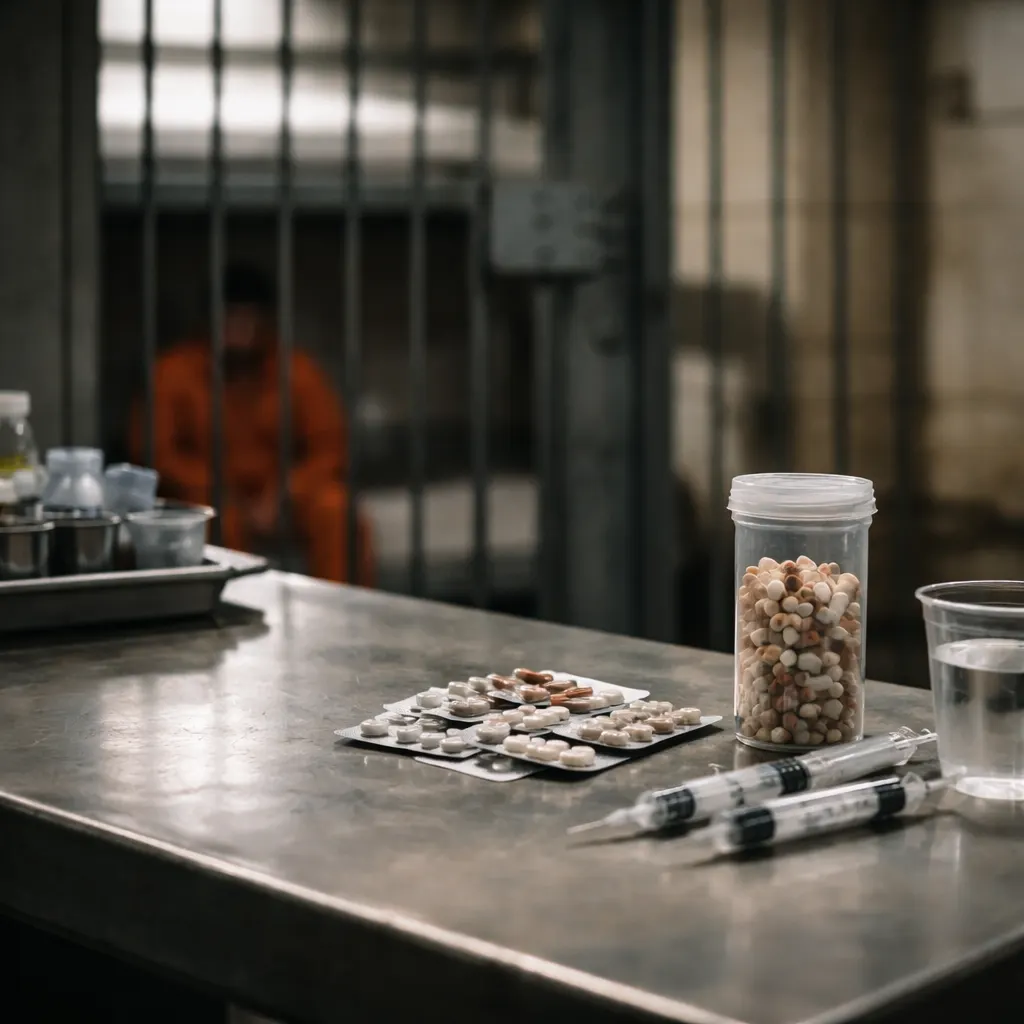
If every jail and prison in the United States provided comprehensive opioid addiction treatment, the system could prevent roughly 13,000 overdose deaths each year, according to a new policy study published by the R Street Institute. The report, released in 2025, examines how medications for opioid use disorder (MOUD) remain largely unavailable across American correctional facilities despite strong evidence that they save lives, reduce crime, and cost less than emergency overdose response. More than half a million people struggling with opioid dependence pass through U.S. jails and prisons annually, yet most leave without access to the treatments that work best.
The data reveals a troubling gap between need and care. The study found that roughly 40 percent of individuals entering prison meet criteria for a drug use disorder, and nearly one-third of currently incarcerated people have an opioid use disorder or are opioid dependent. Among people who were released from jails and prisons in 2022, almost 22,000 died of an opioid overdose within a year—accounting for more than a quarter of all opioid overdose deaths nationwide that year. Only 12 state prison systems offer both treatment continuation and initiation at all their facilities, and just 16 states provide all three FDA-approved medications. In local jails, between 32 percent and 44 percent offer at least one type of MOUD to at least some people, but only 12.8 percent provide the medications to everyone with an opioid use disorder. Six states don't offer any MOUD in their prisons at all.
Research shows that receiving MOUD in jail cuts the risk of fatal overdose by 52 percent, nonfatal overdose by 24 percent, and death from any cause by 56 percent, the report states. People who took MOUD while incarcerated are 12 percent less likely to commit another crime after release compared to those who didn't receive the medications. The authors write that providing MOUD has been shown to shrink contraband and illicit drug markets inside facilities, countering the widespread belief that expanding access would increase diversion. A cost analysis of MOUD provision in Massachusetts correctional facilities estimated spending less than $7,500 per life-year gained, with overall expenditures shifting from overdose response to therapeutic care rather than ballooning budgets.
The report explains that correctional staff cite several interconnected obstacles to offering treatment: funding limits, staffing shortages, misconceptions that MOUD "simply replaces one drug with another," and especially the regulatory barriers around methadone. Federal rules still restrict methadone—which has the strongest treatment retention and overdose prevention record—to specialized opioid treatment clinics, making it prohibitively expensive and logistically difficult for most jails and prisons to provide. Opening such a clinic requires navigating financial, institutional, and regulatory hurdles that exceed standard requirements for controlled substances, which helps explain why fewer than half of jails offering MOUD make methadone available. Meanwhile, transitions between facilities often interrupt treatment entirely because data sharing across the system is limited and fewer than 28 percent of jails that provide MOUD offer all three medication options, creating dangerous gaps when people move.
The study recommends reducing regulatory burdens on methadone by allowing specialist providers to prescribe it and pharmacists to dispense it without opening a full treatment clinic, expanding telehealth options to connect incarcerated individuals with community providers, and developing electronic medical recordkeeping systems that follow people across facilities and back into their communities. It also calls for using opioid settlement funds and Medicaid reentry waivers to build the infrastructure and staffing needed to grow programs. The federal Bureau of Prisons already requires all its facilities to screen individuals at intake and offer all three medications to everyone who qualifies, setting a standard the authors argue state and local systems should follow. Providing evidence-based treatment during incarceration isn't just about individual health—it's about safer facilities, stronger reentry outcomes, and communities protected from preventable deaths.