
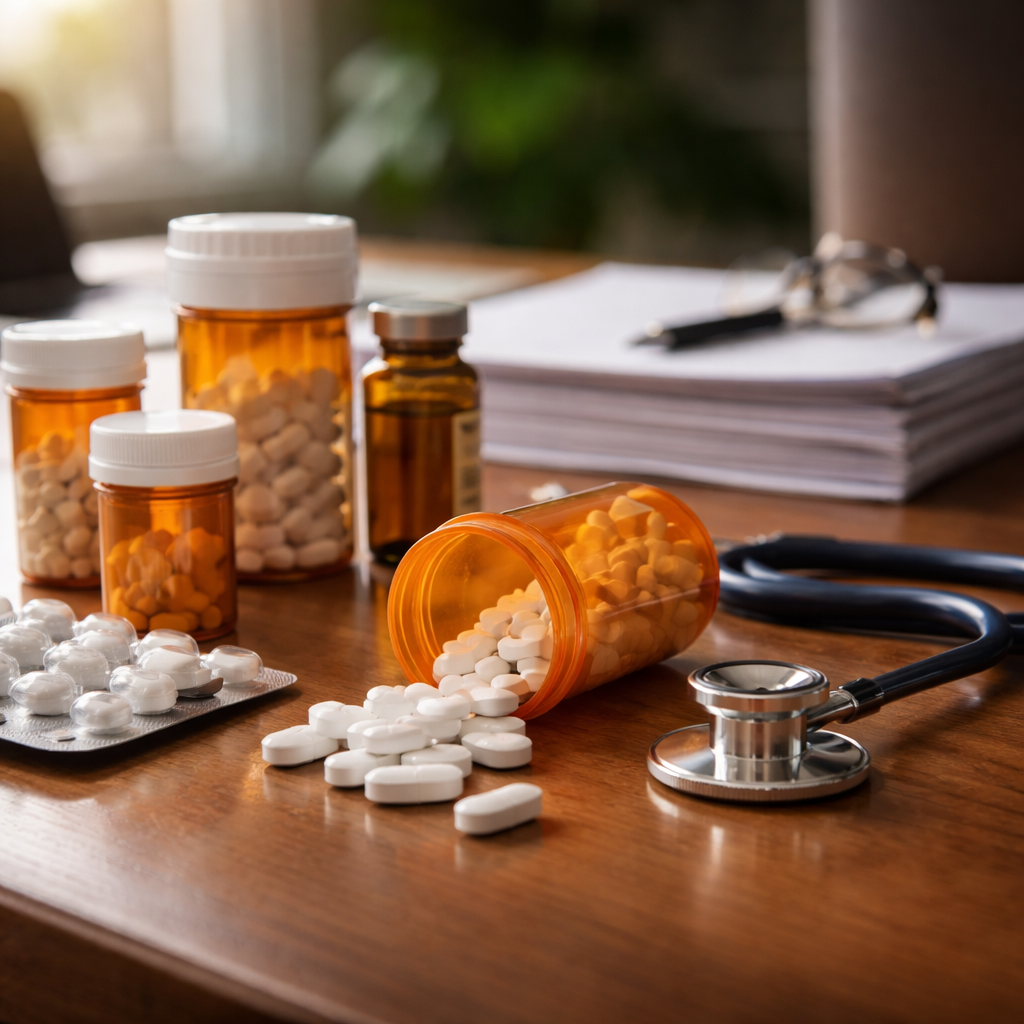
The National Taxpayers Union (NTU) is urging Congress to rethink policies aimed at prescription drug safety, warning that tariffs, price controls, and importation schemes could drive up taxpayer costs while threatening the pharmaceutical sector. In a letter to the Senate Special Committee on Aging dated June 5, 2026, NTU President Pete Sepp argued that recent government interventions—including White House tariffs announced in April 2026 and the Inflation Reduction Act's drug price negotiation provisions—are creating unintended consequences for patients and taxpayers alike. The organization contends that improving drug safety doesn't require sacrificing the economic health of an industry that employs Americans and develops life-saving treatments.
The NTU letter highlights several policy developments with direct fiscal impacts. The April 2026 White House tariff announcement levies a 20 percent import tax on patented pharmaceuticals and ingredients from abroad, with that rate scheduled to rise to 100 percent by 2030. Generic and biosimilar products received an initial exemption, but the Commerce Secretary can recommend extending tariffs to generics after one year if deemed appropriate. Meanwhile, the U.S. Supreme Court recently denied certiorari to lawsuits from AstraZeneca, Boehringer, Bristol Myers Squibb, Janssen, Novartis, and Novo Nordisk challenging the Inflation Reduction Act's drug price negotiation provisions, which threaten a 95 percent excise tax on companies that don't accept government pricing demands. State-level drug importation programs in seven states—ranging from Colorado to Vermont, with Florida's being the most prominent—have attempted to source medications from Canada, though Illinois terminated its program in 2008 after fewer than 4,000 residents used it.
According to the NTU analysis, drug importation carries hidden costs that could wipe out savings. A 2004 Department of Health and Human Services report estimated that screening approximately 10 million packages of imported prescription drugs entering the U.S. would cost nearly $3 billion—roughly equal to the total potential savings projected by the Congressional Budget Office. The report notes that Vermont's 2018 importation study claimed commercial insurers could save between $1 million and $5 million, but the state's Agency of Human Services acknowledged administration "would likely come at substantial cost to the state, requiring upfront investment and appropriations." The NTU also cites a Partnership for Safe Medicines analysis showing that between September 2023 and January 2025, 2,465 bulk foreign shipments of semaglutide or tirzepatide entered the U.S. for inspection, with 195 packages from unregistered entities allowed in "despite clear legal prohibitions."
The organization argues that multiple policy failures are converging to undermine both drug affordability and supply chain security. The Inflation Reduction Act's price negotiation scheme is deterring investment not just in innovator drugs but also in generic and biosimilar equivalents, since brand-name drugs under negotiation often have generics in development but not yet approved for marketing. Tariffs on generic drugs—which already operate on extremely thin profit margins—would raise input costs and potentially force some firms to cease U.S. operations, according to a New England Journal of Medicine article cited in the letter. The NTU points out that private companies and families already pay billions in user fees to fund FDA drug safety functions, accounting for up to half of FDA's budget, yet the value received is questionable when import inspections and foreign facility inspections fall short. The report explains that raising costs on Active Pharmaceutical Ingredient imports would erode trade advantages and impose higher costs on Medicare, Medicaid, and other taxpayer-supported health programs, while discoveries that could occur domestically will either shift abroad or never happen.
Instead of tariffs and price controls, the NTU recommends a four-part approach: maintaining the hospitable tax climate created by last year's OBBBA legislation, which made permanent full and immediate expensing for business investments and domestic R&D; pursuing patient trade agreements that address wealthy nations "freeriding" off U.S. drugs with artificially low prices; passing regulatory reforms like the Biosimilar Red Tape Elimination Act; and demanding accountability from FDA on inspection data for foreign drug facilities. The letter emphasizes that nearly 90 percent of newly launched drugs worldwide are available in the U.S., and over 90 percent of prescriptions written domestically are for generics—a "strategic asset of drug access and affordability" that should be strengthened, not undermined. The organization warns that no single policy can guarantee every patient's safety, but a holistic approach from Congress and the Executive Branch can improve the "home-grown capabilities of the great national security asset that is our pharmaceutical sector."