
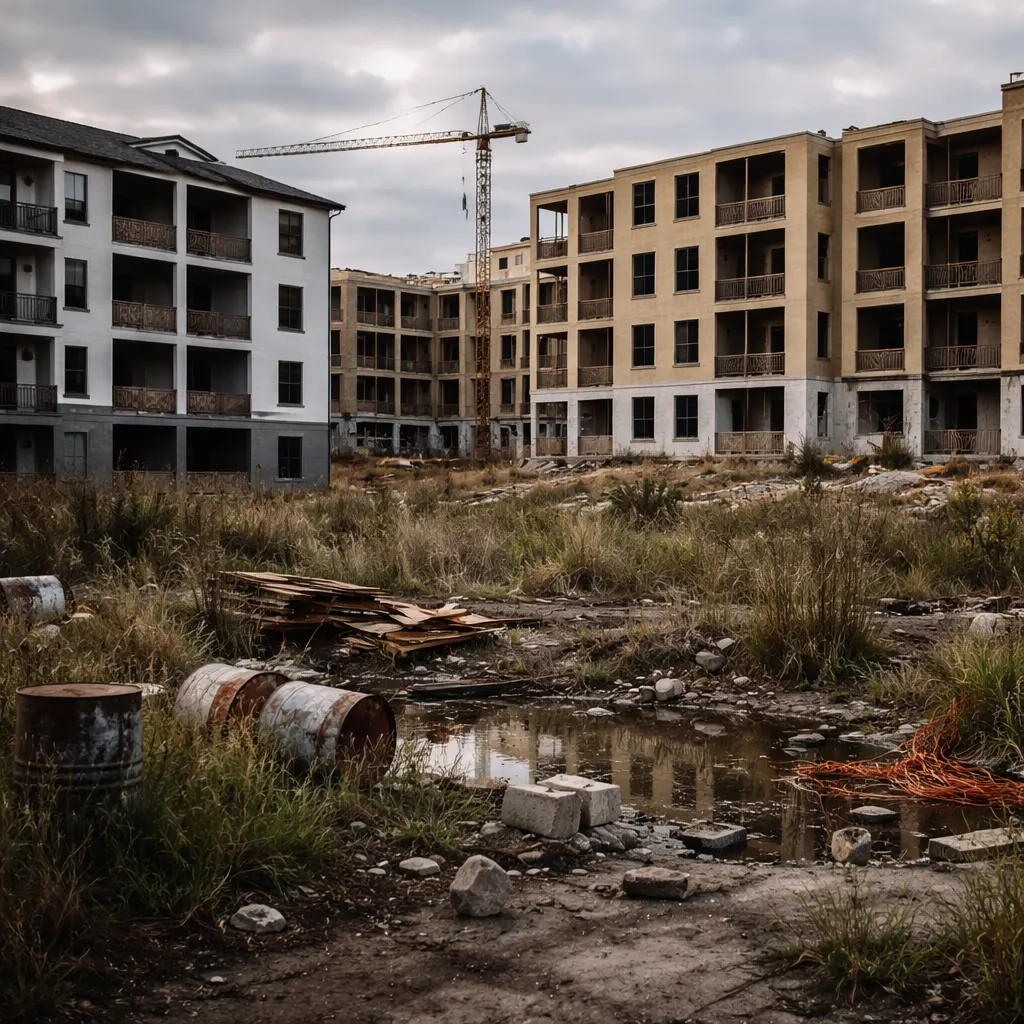
A popular policy tool used by cities nationwide to create affordable housing has produced zero completed mixed-income units in New Orleans since its adoption in 2021, according to a report published by the Texas Public Policy Foundation. The report examines inclusionary zoning mandates—requirements that developers include below-market-rate units in new projects or pay fees instead—in cities including Boston, San Francisco, Chicago, Denver, and New Orleans. Rather than generating affordable housing, the report finds, these ordinances primarily discourage construction altogether.
New Orleans' ordinance, known as Article 28, requires projects of 10 or more units in designated zones to set aside 5 to 10 percent of apartments at 60 percent of area median income for 99 years, or pay $304,810 for each unit not provided. The city's own pre-adoption analysis projected that outside downtown and the French Quarter, a 10 percent set-aside would leave most projects with shortfalls ranging from hundreds of thousands to several million dollars, even with incentives. A 60-unit building opting to pay the fee instead would face over $1.8 million just to obtain a permit. By the city's November 2025 count, the mandate had produced no completed mixed-income units. Developers responded by either not building, constructing fewer than 10 units to avoid the requirement, or building outside the mapped zones entirely.
According to the report, supporters of these mandates "call them a free lunch: affordable housing paid for by rich developers, not taxpayers." The authors write that "New Orleans' own record shows there is no such thing as a free lunch—only a slower, thinner one." The report also notes that the policy failed to distribute affordable housing evenly, with the city's own analysis identifying Mid-City and other neighborhoods most needing new housing as unable to support construction under any combination of added incentives, while only the highest-rent submarkets could absorb the costs.
The report explains that developers build when expected rent successfully covers land, construction, and financing costs while providing reasonable returns. Requiring a portion of units to rent below market lowers the revenue available to cover these expenses. The gap must be closed through reduced profits, higher rents on remaining units, or most commonly, abandoning the project entirely. New Orleans' 99-year requirement makes this worse by permanently reducing the building's appraised value, transforming marginally profitable projects into ones that can't secure financing. The mechanism is nearly identical across cities: projects above a size threshold must reserve a share of units at below-market rates for years or decades, or pay fees instead.
These mandates face new legal challenges following the Supreme Court's 2024 decision in Sheetz v. County of El Dorado, which ruled unanimously that legislative fees must meet the same nexus-and-proportionality standards previously applied only to case-by-case permit conditions. A developer is already suing Denver over its version on these grounds, and the report suggests ordinances in Denver and New Orleans may be found unconstitutional as violations of the Fifth Amendment's protections against uncompensated takings. The report recommends that cities wanting more affordable housing should instead remove barriers that make construction expensive, concluding that mandating developers build at their own expense has produced a track record of "skipped projects, dodged thresholds, and years where their policy's biggest achievement is the production of nothing."