
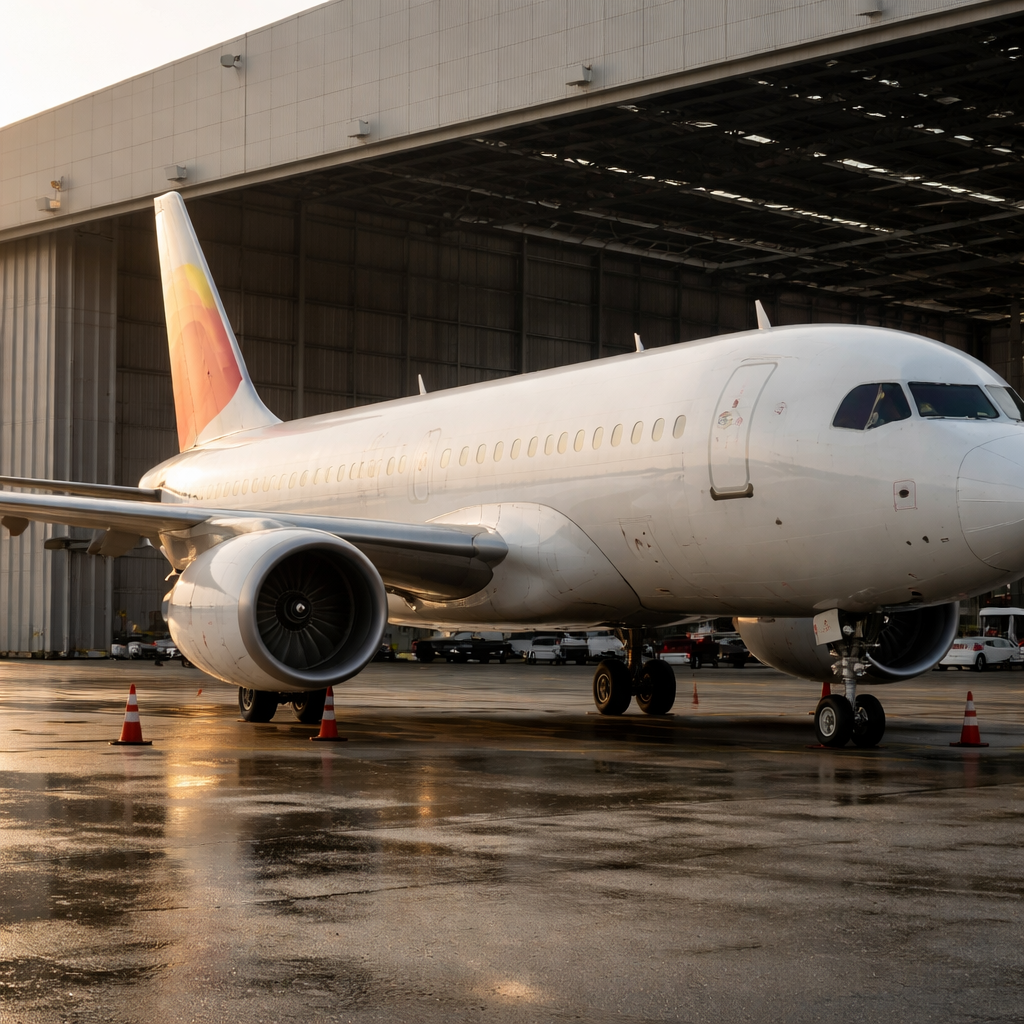
China's state-owned aircraft manufacturer COMAC has received at least $72 billion in government subsidies as part of Beijing's campaign to dominate the global commercial aviation industry, according to a report published June 15, 2026, by the Information Technology and Innovation Foundation. The subsidies don't include additional supports like tax benefits, free or low-cost land and utilities, meaning the true figure is likely far higher. The report warns that COMAC represents a "foundational threat" to the market-based aviation industry and calls the company "illegitimate" from a commercial perspective, arguing it can only exist because of massive Chinese government intervention that allows it to compete without earning normal profits.
The report documents how China's aerospace industry has exploded over recent decades, with the country's global market share in the "other transportation industry"—which includes aerospace manufacturing—growing from just 1.8 percent in 1995 to more than 14 percent in 2022, a 700 percent increase. COMAC now has 1,003 C919 aircraft on firm order, with 46 percent committed to six Chinese state-owned airlines and the remaining 543 ordered by 12 operating lessors, all but one of which are Chinese owned. The C919's estimated unit cost is $90 million to $100 million, significantly lower than the $111 million for a comparable Airbus A320neo and $121 million for a Boeing 737 MAX. Meanwhile, the U.S. aerospace industry produced $306.9 billion in economic output in 2023, supports 1.6 million American jobs when direct and indirect effects are counted, and ran an $80 billion trade surplus in 2024. Between 2019 and early 2026, Airbus sold roughly four times as many aircraft in China as Boeing did—approximately 760 to 190 aircraft—compared to roughly equal sales from 2010 to 2018.
The report details how China has deployed what it calls "innovation mercantilist" practices to build COMAC into a competitor, including intellectual property theft, forced technology transfers, and compelled purchases by state-owned airlines. Cybersecurity firm CrowdStrike tracked a China-based hacking group dubbed "Turbine Panda" that launched multiple cyberespionage attacks against companies supplying C919 components from 2010 to 2015, with CrowdStrike assessing the theft allowed COMAC to trim "several years (and potentially billions of dollars) off of its development time." A U.S. government indictment filed in October 2018 charged 10 individuals with conspiring to steal aerospace trade secrets from 13 Western companies. The report notes that 91 percent of the C919's critical systems, by value and complexity, come from foreign suppliers, with only 14 of the 82 suppliers being Chinese. Author Stephen Ezell writes that "from a market-based perspective, COMAC is an illegitimate company" because no private firm would enter the capital-intensive aircraft industry without government backing, yet unlike Airbus or Embraer—which also began with subsidies—Chinese competitors "compete on non-market-based terms."
The economics of the threat are particularly serious because aircraft manufacturing depends on razor-thin margins and massive economies of scale. The report explains that Boeing historically averaged just over 5 percent annual profit from 1970 to 2010, compared to 8.6 percent for the average Fortune 500 company, and estimated it would need to sell 1,900 of its 787 Dreamliners just to break even on the program after spending over $15 billion in development costs. In this environment, every aircraft COMAC sells disrupts the learning curves and production volumes that Boeing and Airbus need to remain profitable. The report warns that over the next 20 years, COMAC could capture 20 to 30 percent of the Chinese market for 6,000 short-haul planes, which would inflict "significant damage to the economics of the market-based global aviation industry." China is using its Belt and Road Initiative—dubbed the "Air Silk Road" for aerospace—to push COMAC sales in developing countries by pairing aircraft with financing, leasing arrangements, and even equity stakes in national carriers. Between 2024 and 2044, China's aircraft fleet is expected to more than double from 4,425 to 9,755 aircraft, making it one of the world's fastest-growing aviation markets.
The report recommends the United States and allies make a pact that their airlines won't purchase COMAC aircraft under any circumstances, and calls for reimposing export controls on jet engine sales to COMAC—engines the C919 currently depends on from CFM International, a joint venture between GE Aerospace and Safran. It also urges a comprehensive U.S. strategy to support aerospace competitiveness, including increased NASA aeronautics research funding, which has been cut 37 percent when adjusted for inflation over the past two decades. The bottom line: China knows the playbook, Western policymakers know the threat, and unlike with solar panels or telecom equipment, there's no excuse for letting another critical industry fall to state-backed competition.