
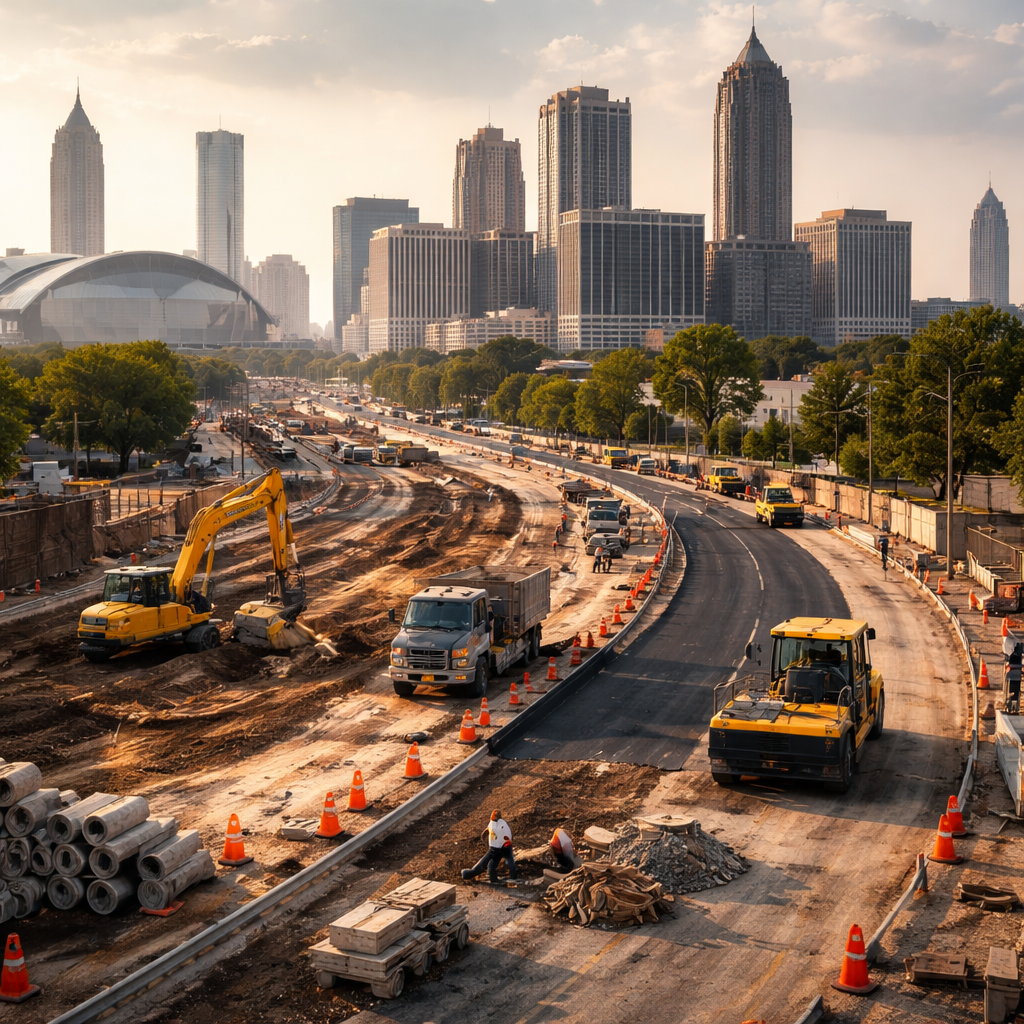
Atlanta officials completed 18 World Cup-related infrastructure projects ahead of the 2026 FIFA tournament, racing to a 98.9% completion rate just before a construction moratorium began in June 2026, according to a new analysis from the Georgia Public Policy Foundation published June 18, 2026. The work—resurfaced streets, restriped intersections, new streetlights, and repaired sidewalks—represents improvements residents have requested for years, but which suddenly accelerated when the city learned it would host eight World Cup matches, including a semifinal. The report highlights a stark contrast: infrastructure projects tied to a global deadline moved fast, while ordinary taxpayer-funded work has lagged far behind.
Atlanta learned it would host World Cup matches in June 2022, with the tournament schedule confirmed in February 2024. That October, the Atlanta City Council approved a $120 million transportation infrastructure bond package for work in downtown and other high-traffic corridors on a two-year timeline. The money funded resurfacing 25 miles of streets, restriping 200 intersections, installing 150 streetlights, and repairing 14 miles of sidewalks. Invest Atlanta, the city's economic development authority, also approved funding to help small businesses make improvements and prepare for the visitor surge, while MARTA rolled out match-day transit plans and station preparations to move fans between the airport, downtown, and the stadium.
City officials noted that the infrastructure work was directly related to World Cup preparation, describing the bond as central to strengthening "mobility, accessibility and safety" as Atlanta prepared for "the demands of a global event." The report observes that "not all of these projects came into being because of FIFA," as some were already planned for long-term development, but "the tournament has been a clear accelerant." According to the analysis, the World Cup work had "what ordinary infrastructure programs often lack: a concentrated geography, a defined project list, dedicated funding and a deadline everyone understands."
The rapid completion exposes a troubling pattern in how Atlanta handles infrastructure. The city's voter-approved "Moving Atlanta Forward" program—a $750 million package passed in 2022 for transportation, parks, public facilities, and public safety—spent less than 10% of project funds two years into what was presented as a five-year program, according to auditors. A later review found more progress but noted some projects scheduled to begin in 2024 still hadn't started. The report explains that World Cup projects succeeded because they had clear deadlines and global visibility, while ordinary projects backed by taxpayer dollars "do not carry the same sense of accountability." A deadline with international attention made infrastructure flaws "more visible and embarrassing," creating urgency that everyday city government lacks.
The analysis concludes that Atlanta residents aren't complaining about finally getting better sidewalks and brighter streets—the problem is that "so many improvements apparently needed to welcome visitors are the same improvements residents have needed for years." The report finds that the World Cup reveals something fundamental about public works: "Deadlines matter, and transparency—in this case, the eyes of the entire world—is an excellent motivator to meet them." When the city has a deadline it's compelled to take seriously, public work suddenly becomes more urgent and coordinated than when the audience is merely the taxpayers who live there.