
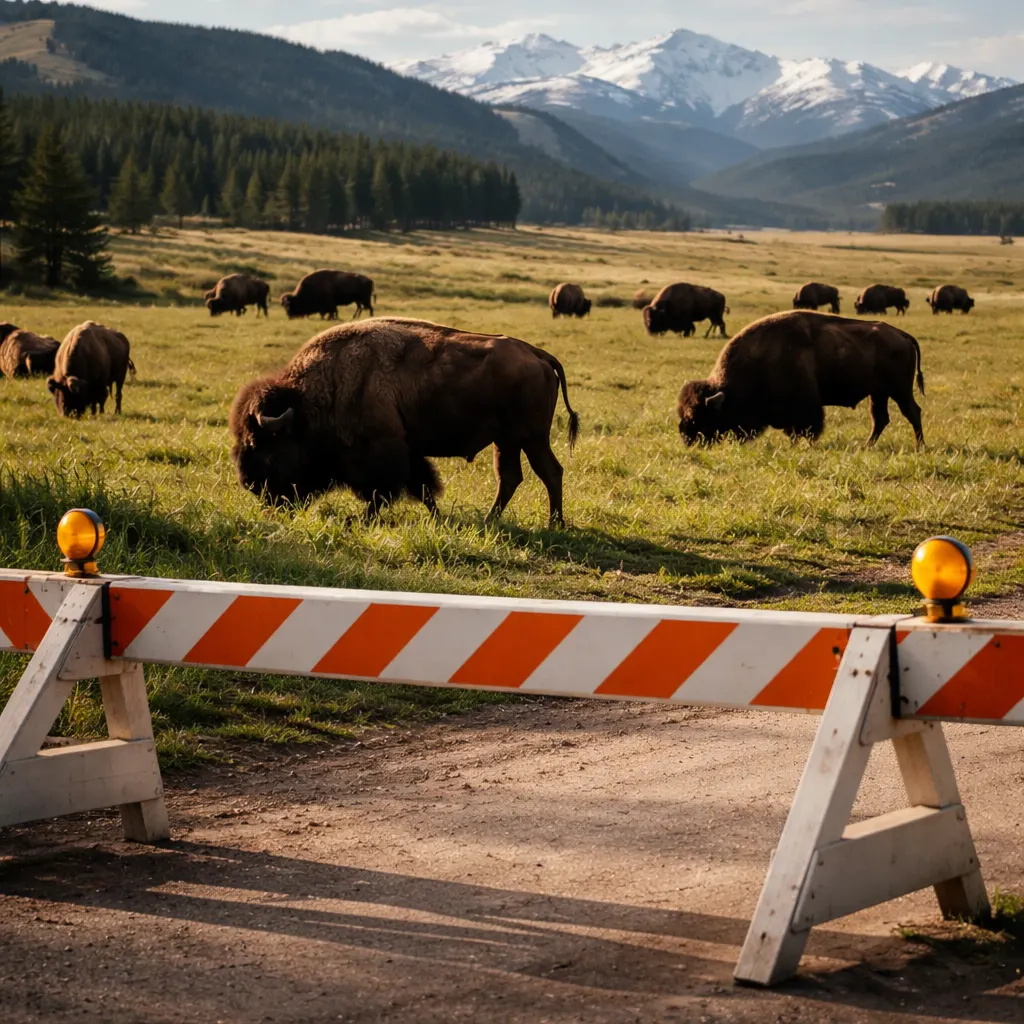
The Bureau of Land Management has ruled that American Prairie cannot graze bison under any of its federal grazing permits, declaring that ranchers motivated by conservation lose eligibility to lease public lands. The decision, detailed in an August 19, 2026 report by the Property and Environment Research Center, represents what the organization calls an unprecedented interpretation of the 1934 Taylor Grazing Act. By defining conservation and ranching as fundamentally incompatible, the ruling targets the nonprofit American Prairie, which has spent two decades purchasing ranches in Montana with accompanying federal grazing rights to build what would become the largest nature reserve in the continental United States.
American Prairie has acquired more than 150,000 acres of private land from willing sellers over the past 20 years, paying market prices for both ranches and their associated federal leases. In a recent transaction, the group obtained rights to roughly 2,000 acres total—1,762 private acres and 320 leased public acres. The organization's stated goal is to conserve three million acres of prairie grasslands in central and northeastern Montana, a reserve that would exceed Yellowstone National Park in size. Under both federal and Montana state law, bison qualify as livestock, yet the BLM determined that eligibility hinges on the agency's judgment about the grazing's primary purpose.
According to the report's author, Jonathan Wood, vice president of law and policy at PERC, "There's nothing in the Taylor Grazing Act that requires this subjective analysis," and it appears the BLM has never asked any lessee about their purposes for grazing or sought information needed to carry out such an indeterminate standard. The decision was rushed to invalidate a specific holder's permits rather than developed through regulation with public input, the report states. Wood writes that the ruling "set back voluntary conservation" and "planted the seed for future threats to ranching on public lands."
The report argues that the new standard creates a pathway for future administrations to demand intrusive details about ranchers' operations and deny leases based on subjective evaluations. A ranch's slim profit margin, for instance, might be interpreted as evidence that the operation stems primarily from tax strategies or lifestyle preferences rather than production. The policy also conflicts with a recent Agriculture and Interior departments agreement to use grazing as a wildfire risk-reduction strategy, which plans to make vacant allotments available for grazing "in advance of the allotment's typical wildfire season"—a purpose that under the agency's new rationale appears to be an improper conservation purpose for grazing federal lands.
The report concludes that competing demands for these lands would be better resolved through markets, compromise, and cooperation rather than political conflict. American Prairie's focus on an area with such a high proportion of what PERC co-founder Richard Stroup called "political lands" may have made political entanglement inevitable, but the outcome remains unfortunate for the organization, opposing ranchers, and both bison and cattle alike. By rejecting the concept of conservation ranching, the BLM has done a disservice to the genuine conservation work ranchers perform across the country every day.