
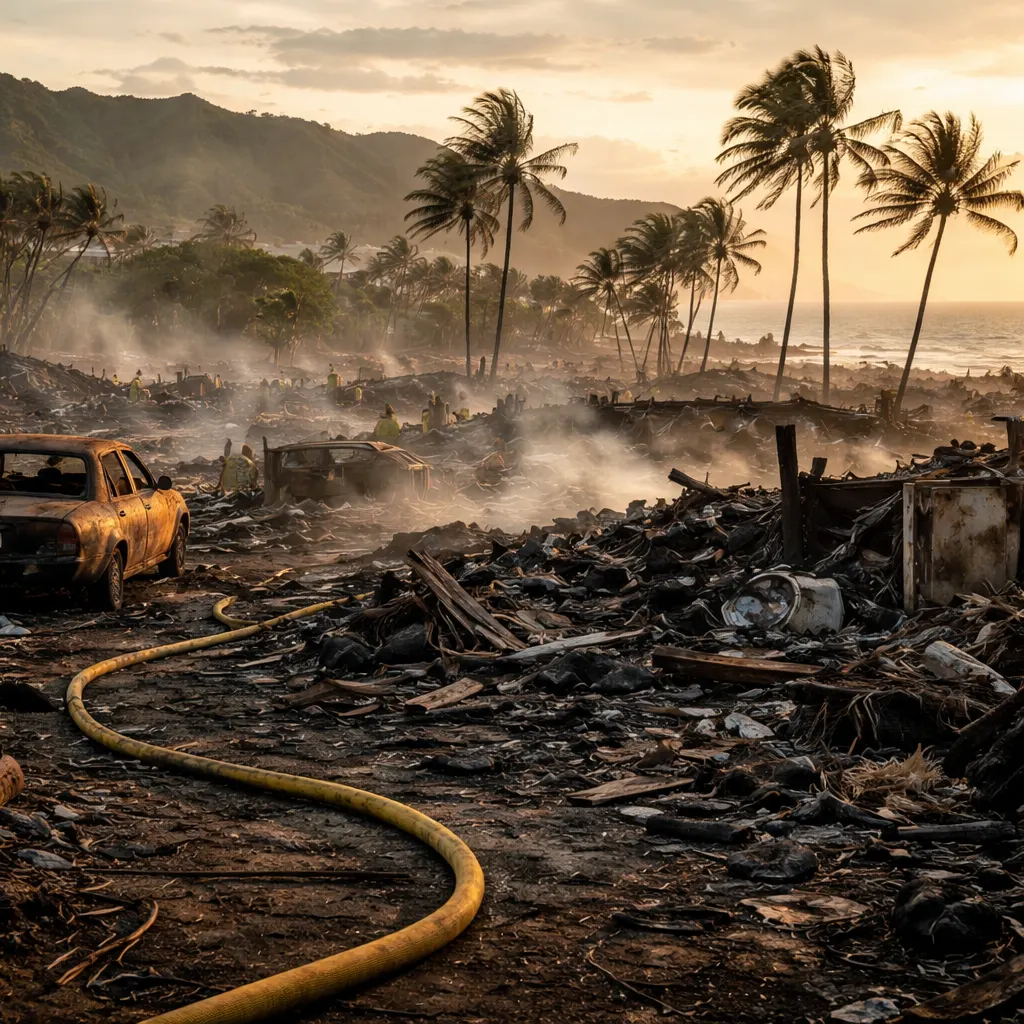
Hawaii has received one disaster declaration in 2026 as of June, according to a report published by USAFacts on July 8, 2026. The report, which draws on Federal Emergency Management Agency data, shows the state averages two disaster declarations per year based on the most recent five full years of data. In 2025, Hawaii had two declarations, matching the five-year average.
Since 1980, Hawaii has seen 71 total disaster declarations across 10 disaster categories. Fires have been the most common type, accounting for 28 declarations, or 46.7% of all disasters in that timeframe. In just the last five years, fires have made up nine out of the state's 13 disasters. The most recent declaration came on April 7, 2026, for severe storms, flooding, landslides, and mudslides. In 2023 alone, Hawaii recorded six fire-related declarations on consecutive days in August, including the Lahaina Fire, Upcountry Fire, Pulehu Fire, Mauna Kea Beach Fire, and Kohala Ranch Fire. In 2020, COVID-19 accounted for two biological emergency declarations.
A disaster declaration is "more than just recognizing an event—it's a formal request for federal aid when state, local, or tribal resources are overwhelmed," the report explains. The president must approve all declarations after determining that federal support is necessary. The report notes that declarations vary due to the type and severity of disasters, whether the president approves requests for federal assistance, and other factors. States can have multiple declarations for a single disaster event, both by the state and Native American tribes, and for disaster and emergency declarations.
The report breaks down three types of declarations, each with different thresholds and purposes. Major disaster declarations apply to hurricanes, tornadoes, snowstorms, floods, earthquakes, wildfires, volcanic eruptions, landslides, mudslides, droughts, explosions, and other severe natural events that typically cause widespread damage requiring long-term recovery efforts. Emergency declarations are issued when the president determines federal assistance is needed to protect lives, property, or public health and safety, with aid capped at $5 million for urgent crises like public health emergencies, terrorist attacks, or power outages. Fire management declarations, the third category, apply to managing and suppressing either a single large blaze or multiple smaller fires, with expedited decisions usually made within a few hours instead of the longer timelines for other declarations. In most cases, governors request these declarations, though tribal nations may also submit requests independently, and the federal aid available depends on what kind of disaster is declared.