
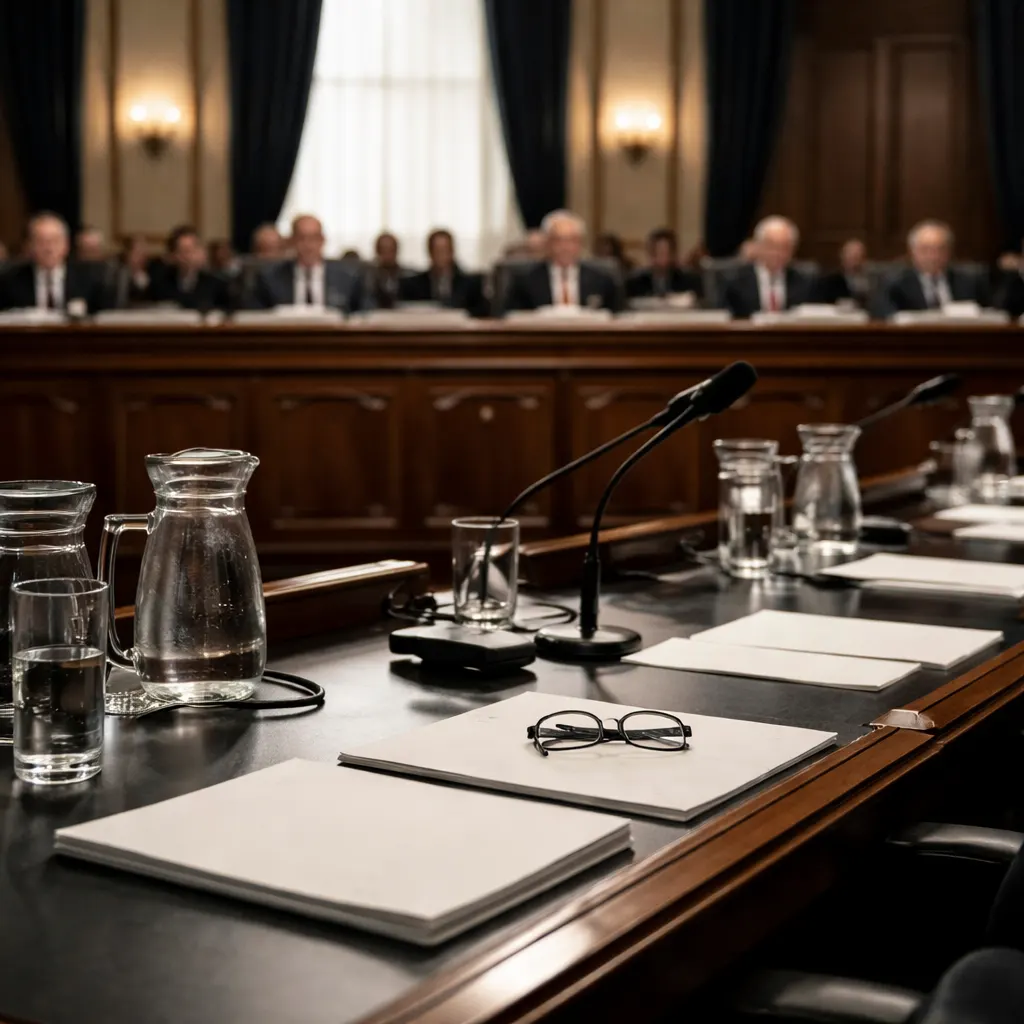
A House Judiciary subcommittee held a hearing on September 15 to examine what Republicans described as threats to U.S. sovereignty from the International Criminal Court, nearly a month after the Trump administration sanctioned the court's president and a senior prosecutor. The hearing, titled "The International Criminal Court's Threat To The Sovereignty Of The United States And Its Allies," focused on the ICC's attempts to claim authority over citizens of nations that haven't signed the Rome Statute, the treaty that created the court. The session came as the administration ramps up what the State Department calls a whole-of-government campaign against the international tribunal.
The administration sanctioned ICC President Tomoko Akane of Japan and ICC Senior Trial Lawyer Abdoulaye Seye of Senegal on August 18, adding both to the Treasury Department's Specially Designated Nationals and Blocked Persons List. President Donald Trump had signed Executive Order 14203 on February 6, 2025, creating the legal framework for penalties against certain ICC officials. The Treasury's Office of Foreign Assets Control issued a general license at the same time, allowing specific transactions needed to end dealings with Akane and Seye through September 17. Three African nations—Burkina Faso, Mali, and Niger—announced their withdrawals from the Rome Statute in June and formally notified the United Nations, starting the process of leaving the ICC.
Rep. Darrell Issa of California, who chairs the subcommittee on Courts, Intellectual Property, Artificial Intelligence, and the Internet, led the hearing with Rep. Hank Johnson of Georgia serving as ranking member. The panel heard from two witnesses: Stu Smith, an investigative analyst at City Journal, a Manhattan Institute publication, and Abraham Bell, a law professor at the University of San Diego School of Law. According to the report, the hearing centered on the ICC's jurisdiction over nationals of countries that haven't joined the Rome Statute and the legal and constitutional questions raised by a foreign tribunal attempting to investigate or prosecute U.S. citizens and service members.
The administration argues the court has overstepped its mandate by claiming jurisdiction over nationals of countries, including the United States, that haven't consented to ICC authority or ratified the Rome Statute. The State Department has said it's ready to take further action against the court beyond the sanctions already imposed. The ICC and its backers have resisted U.S. pressure and insisted the court's activities are rooted in the Rome Statute's provisions. Despite the sanctions and withdrawals, the court continues investigations and judicial proceedings related to alleged genocide, crimes against humanity, and war crimes.
The September 15 hearing highlighted growing congressional alarm about the court's reach over Americans and citizens of other non-member states as the Trump administration's confrontation with the ICC intensifies. With sanctions now in place and three countries moving to exit, the dispute increasingly revolves around conflicting interpretations of national sovereignty and the boundaries of international criminal law. The administration's campaign to persuade other countries to reduce support for the ICC continues as the court maintains its operations.