
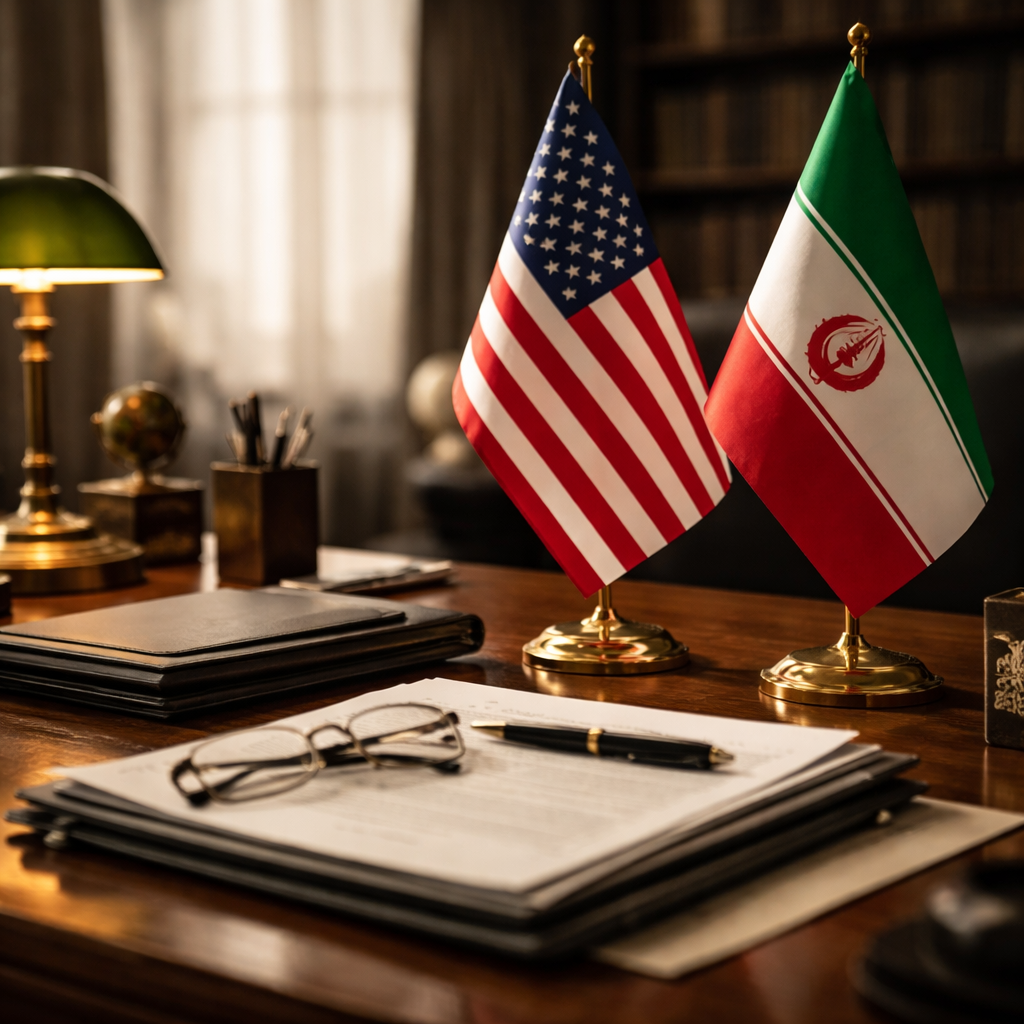
The editors at National Review Online have sharply criticized President Donald Trump's latest negotiation with Iran, declaring the memorandum of understanding "lopsided in Iran's favor." The conservative publication's assessment, highlighted by the John Locke Foundation on June 19, 2026, draws a comparison to Richard Nixon's Vietnam War negotiations, with State Department official John Negroponte's observation that "we bombed them into accepting our concessions" applying equally to Trump's approach. The analysis argues that despite military pressure, the United States has granted Iran massive financial and strategic gains in exchange for limited concessions.
According to the report, Iran's main concession is reopening the Strait of Hormuz, but the commercial waterway won't return to normal operations. The memorandum states that Tehran won't charge fees "for 60 days," suggesting Iran will start collecting tolls afterward. In return, the U.S. is lifting its blockade on Iranian ports and allowing Iran to sell oil, a revenue source worth tens of billions of dollars annually. The memorandum also commits the U.S. to unfreezing Iranian assets totaling roughly $24 billion "upon the implementation of this M.O.U.," potentially within weeks. Beyond these immediate gains, the agreement contemplates lifting all U.S. sanctions and delivering a $300 billion reconstruction fund raised by Iran's neighbors, contingent on a final nuclear agreement.
The report notes that National Review editors questioned "how many proverbial pallets will be needed to deliver this cash windfall to Iran," referencing the Obama administration's controversial cash delivery. The nuclear terms remain "studiously vague," though they specifically mention "down-blending on site under the supervision of the I.A.E.A." for enriched uranium, which was a key component of Barack Obama's Iran deal that Trump withdrew from during his first term. The 60-day timeline for finalizing nuclear terms is extendable, and the agreement refers to Iran's "nuclear needs," which the report suggests is likely a euphemism for enrichment. At the G-7 summit, President Trump explicitly stated Iran should be able to enrich at low levels, coupled with dismissive remarks about obtaining Iran's nuclear "dust."
National Review's critique centers on what the deal fails to achieve. The report explains that Trump's comments about low-level enrichment suggest Iran won't give up enrichment or hand over its uranium, both long considered essential benchmarks for setting back Iran's nuclear program. The comparison to Nixon's Vietnam negotiations underscores the central irony: military action was supposed to force Iranian concessions, but instead resulted in the U.S. making major concessions while Iran retains its nuclear infrastructure and gains immediate access to billions in frozen assets and oil revenues. The financial package alone—$24 billion in unfrozen assets, tens of billions in annual oil revenue, and a potential $300 billion reconstruction fund—represents an enormous windfall for a regime the Trump administration spent years trying to economically strangle through maximum pressure sanctions. The deal's vague nuclear provisions and extended timelines leave Iran positioned to maintain enrichment capability while collecting immediate economic benefits.