
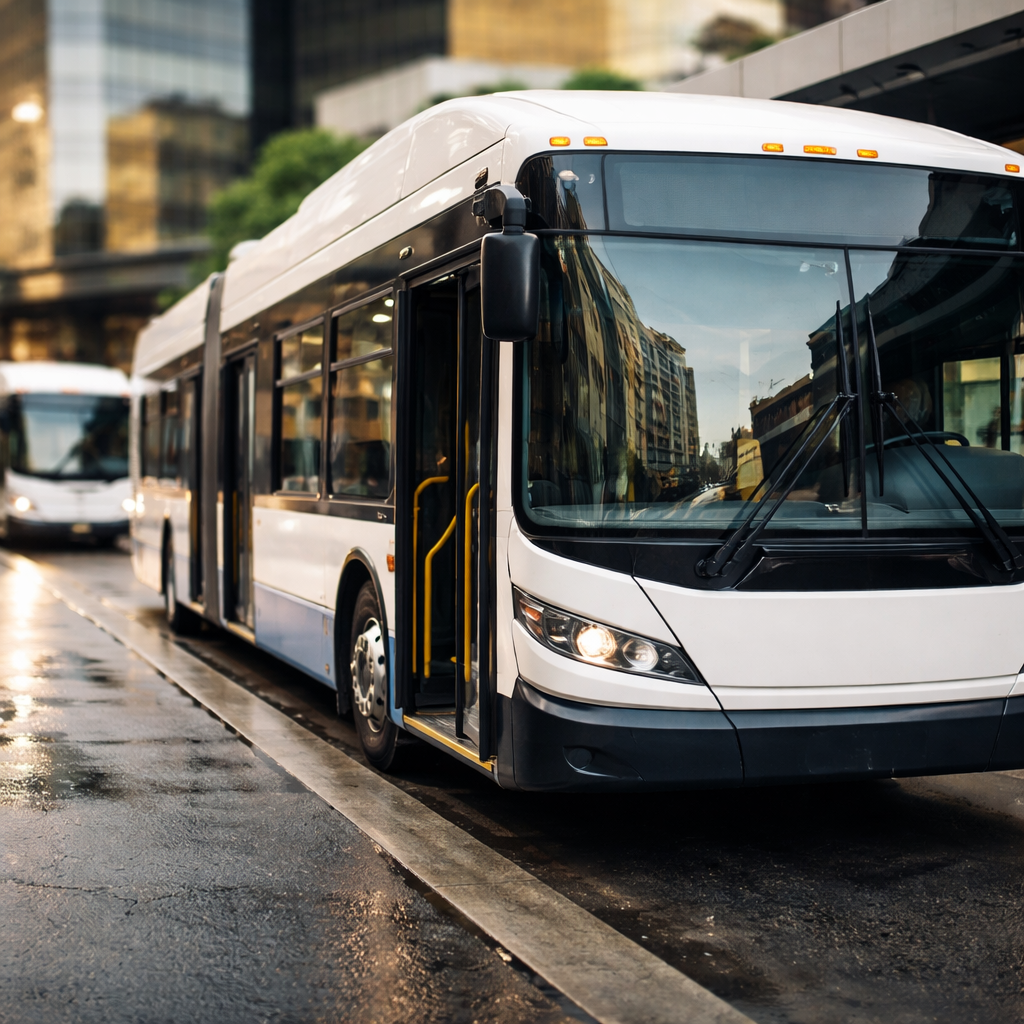
Federal transit buses in the United States can cost twice as much as comparable vehicles in peer countries like France and Germany, according to a new report published June 18, 2026, by the Niskanen Center. The analysis examines the pending BUILD America 250 Act, a surface transportation reauthorization bill awaiting a House floor vote, and finds that while the legislation takes meaningful steps to address inflated infrastructure costs and expand housing near transit, it needs technical refinement and broader reforms to fully deliver on its promise of improving Americans' access to jobs, services, and daily opportunities.
The report details several striking cost problems in current transit procurement. Currently, the federal government pays 85 percent of the cost of nearly every bus purchased with federal funds, no matter the price tag. Transit systems in 373 out of 412 urbanized areas rely entirely on buses, making procurement costs a critical issue. The report cites data showing that in 2024, 70 percent of bus procurements included custom features like specialized windows or transmissions, fragmenting demand and discouraging manufacturer competition. As an example of inflated benchmarks, the Metropolitan Transportation Commission in the San Francisco Bay Area set its 40-foot diesel bus benchmark at $736,000—more than double European costs. The reauthorization bill would cap federal per-bus payments to a percentage of benchmark prices based on average costs by bus length and propulsion type, but the current draft decreases the federal share from 85 percent to 70 percent over three years.
The report finds that "Buy America" requirements shrink the pool of available bus manufacturers to the much smaller U.S. bus industry, while transit agencies' excessive customization further fragments demand. According to the Niskanen Center analysis, the poor incentive design of federal funding is the primary culprit: "Because they bear so little of the cost, agencies have little incentive to coordinate their purchases." The authors argue that many federally funded fixed guideway transit projects—particularly subways, light rail, and bus rapid transit—fall short of their ridership potential because local restrictions prevent new housing development nearby. The report states that the reauthorization bill's approach to controlling bus costs "is a blunt lever that would needlessly penalize agencies that have managed to control their procurement costs."
The report's analysis reveals that current federal transit grant scoring only indirectly accounts for future housing development, with housing regulations influencing at most 21 percent of final scores. The authors explain that this happens because transit agencies are only responsible for 15 percent of bus costs, giving them little reason to join forces for larger, more efficient orders. The reauthorization bill attempts to address housing near transit by adopting language from the bipartisan Build More Housing Near Transit Act, which would give projects with "pro-housing policy" near station areas a full-point boost on the five-point scoring system. However, the report identifies a critical flaw: the bill applies this boost incorrectly to the "economic development" criterion, which accounts for just 8 percent of the final score, rather than to the overall project score where it would be meaningful. The report also highlights a promising provision allowing Amtrak to develop station-area properties and capture land value appreciation directly, modeled on successful Japanese railway companies that build homes and shopping centers around stations without additional taxpayer funding.
The Niskanen Center recommends that Congress set bus cost benchmarks at a lower percentile—such as the 25th percentile of national purchases—rather than the average, to better proxy for uncustomized costs. The report calls for tying the bulk of transportation formula funding to population or housing growth in metro areas, a provision currently absent from the bill. The authors argue that building more housing near existing transportation facilities operating under capacity is "a great way to expand access to opportunity—likely at a lower cost to taxpayers than building new transportation infrastructure." With surface transportation reauthorization happening at best twice a decade, the report concludes that Congress must preserve the bill's best provisions while sharpening their execution and extending reforms to areas the current legislation leaves unaddressed.