
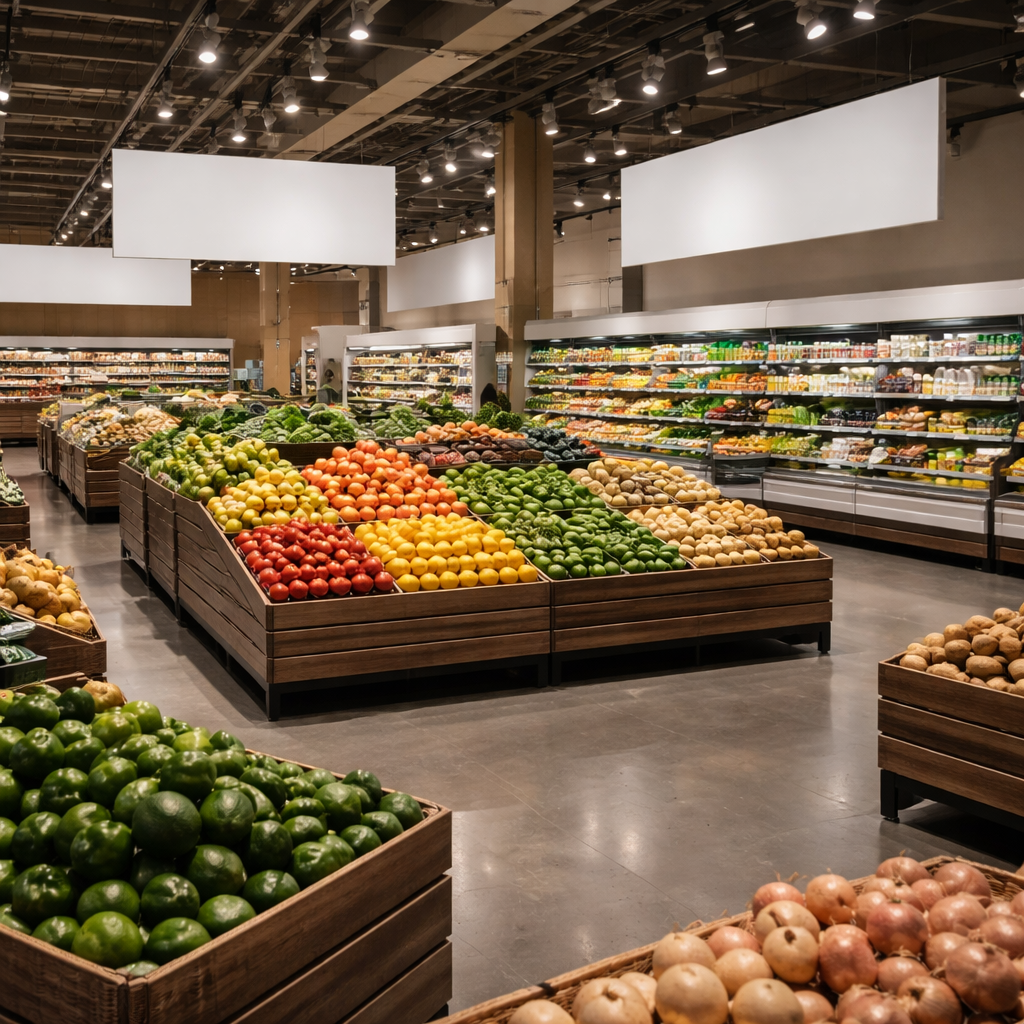
New York City's plan to launch government-owned grocery stores will demand roughly $30 million in upfront taxpayer capital per location, with a flagship East Harlem store already paid for but not opening until 2029, according to an analysis published June 17, 2026 by the MacIver Institute. The report warns that Mayor Zohran Mamdani's push for one city-backed or city-owned store per borough—backed by tens of millions in subsidies, rent waivers, property tax exemptions, and wage mandates—threatens to crowd out private grocers while repeating proven policy failures from other cities.
The flagship location in East Harlem has already consumed approximately $30 million in taxpayer funds, with an additional $40 million earmarked for each subsequent store planned across New York's five boroughs. The analysis notes that private supermarkets typically operate on razor-thin net profit margins of just 1-3%, requiring tight cost control, smart procurement, low spoilage, and effective theft prevention to survive. Mayor Mamdani has framed the initiative as redirecting city funds "from corporate supermarkets to city-owned grocery stores, whose mission is lower prices, not price gouging," positioning private grocers as villains while casting municipal stores as benevolent alternatives.
According to the report's author Dylan Wilder, "Government-run operations, driven by politics rather than profits, rarely match that discipline" required for grocery retail success. The analysis cites historical precedents: in Kansas City, a publicly supported Sun Fresh Market lost $885,000 in a single year before the city shuttered the store, while experiments in Baldwin, Florida, and towns in Kansas "struggled to break even, faced with bare shelves and rampant shoplifting, and eventually handed operations back to the private sector." The report argues these weren't isolated failures but reflect "the structural problem of removing market incentives from the game."
The analysis explains that costs in government-run stores tend to creep upward due to prevailing wage rules, bureaucratic red tape, and lack of competitive pressure, with taxpayers ultimately covering shortfalls. The report contends that prices reflect "supply, demand, costs, regulations, taxes, crime, and inflation—not just corporate greed," and that markets have delivered unprecedented food access through competition and profit motives. Instead of municipal retail, the report recommends cutting regulatory barriers, zoning restrictions, and taxes that inflate prices, reducing energy and supply-chain costs, focusing on crime reduction to lower security expenses, and using targeted aid like SNAP vouchers that integrate with existing markets rather than building parallel public systems.
The report also flags potential spillover to other states: Wisconsin Democratic Socialist gubernatorial candidate Francesca Hong has publicly supported state-run grocery stores, authoring a failed March 2026 bill (AB1221) that would have created the Wisconsin Public Food Administration Authority to support publicly-owned grocery stores statewide. The analysis concludes that while New Yorkers deserve relief at the checkout line, "handing the grocery business to City Hall is a recipe for higher long-term costs, reduced choice, and more dependency" because government can subsidize and mandate but can't replicate the efficiency of competitive markets.