
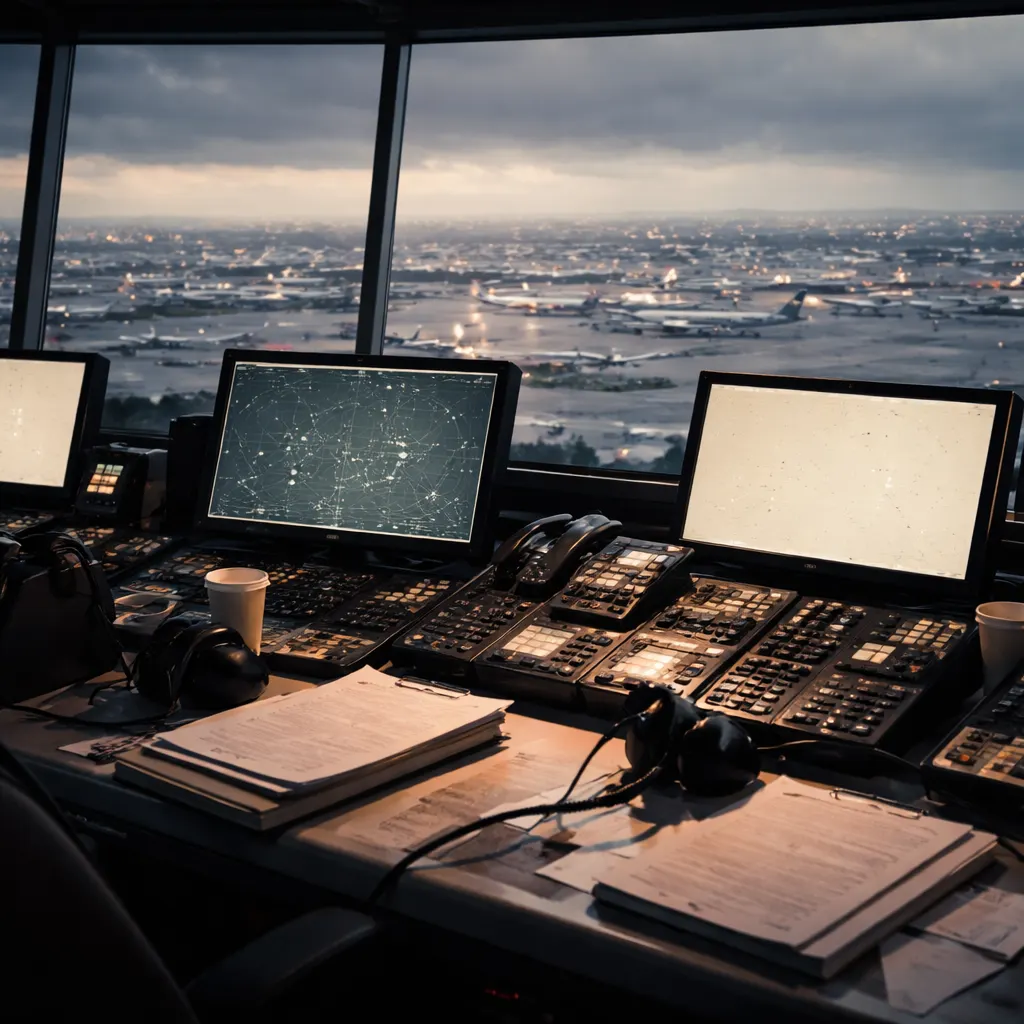
Communications failures that disrupted hundreds of flights across the Northeast on Monday have refocused attention on the deteriorating systems air traffic controllers depend on nationwide, according to a PBS NewsHour report published this week. Congress already provided the Federal Aviation Administration $12.5 billion last year to modernize technology after the deadliest U.S. plane crash in over two decades killed 67 people and spring radar outages caused widespread cancellations at Newark. The latest breakdown at the same Philadelphia facility that experienced problems earlier this year demonstrates how vulnerable the nation's aviation infrastructure remains.
The Philadelphia regional air traffic control center lost both its main and backup data lines simultaneously on Monday when a switch on the primary communications line failed and workers discovered that railroad construction crews had accidentally cut the backup fiber optic line. Controllers operated without radar or communications for hours, bringing commercial air traffic at Newark to a near standstill with no commercial flights landing from roughly 9:40 a.m. until just after 5:20 p.m. local time. More than 200 flights into and out of Philadelphia International Airport were canceled, while disruptions hit LaGuardia and Kennedy airports in New York. Airlines were still recovering Tuesday, with FlightAware.com showing nearly 100 canceled flights by midday because planes and crews remained out of position. Similar communications outages have also disrupted flights in Minneapolis and Dallas over the past year.
Transportation Secretary Sean Duffy is using Monday's disruption as evidence for his request to Congress for an additional $20 billion to fund the next phase of air traffic control modernization. "I have money for some of the telecom replacing old copper wires. Bringing in new fiber so it's faster. The problem is this is a 40-year-old architecture or design," Duffy said on Fox News Tuesday. "I need new money to do a whole new design — a new architecture of telecom so it will never go down." The aviation industry's Modern Skies Coalition backed Duffy's plan and urged Congress to approve the funding because the latest disruptions "demonstrate how critical it is to replace the antiquated technology and outdated systems that underpin our nation's air traffic control infrastructure."
The report explains that problems at key regional control facilities have ripple effects nationwide because major hubs connect to dozens of other airports and affect thousands of passengers. The FAA has already replaced 3,346 communications lines and 190 voice switches across the country since receiving the initial $12.5 billion, but the overhaul plan also includes redesigning the computer system controllers rely on, moving computing to the cloud, and adding a new AI-based system to predict problems. Duffy says he doesn't have enough money for those projects yet. University of Illinois engineering professor Sheldon Jacobson, whose research helped design TSA PreCheck, said the FAA needs to ensure backup systems are independent of primary lines to reduce the chance both will fail simultaneously, and suggested the agency consider adding a third line for additional redundancy. Robert Poole, who leads transportation research at the Reason Foundation, argues the FAA needs reliable long-term funding to complete all necessary upgrades, which is hard to get from Congress, and has long advocated for spinning off air traffic control into an independent agency funded by airline ticket fees rather than annual appropriations.