
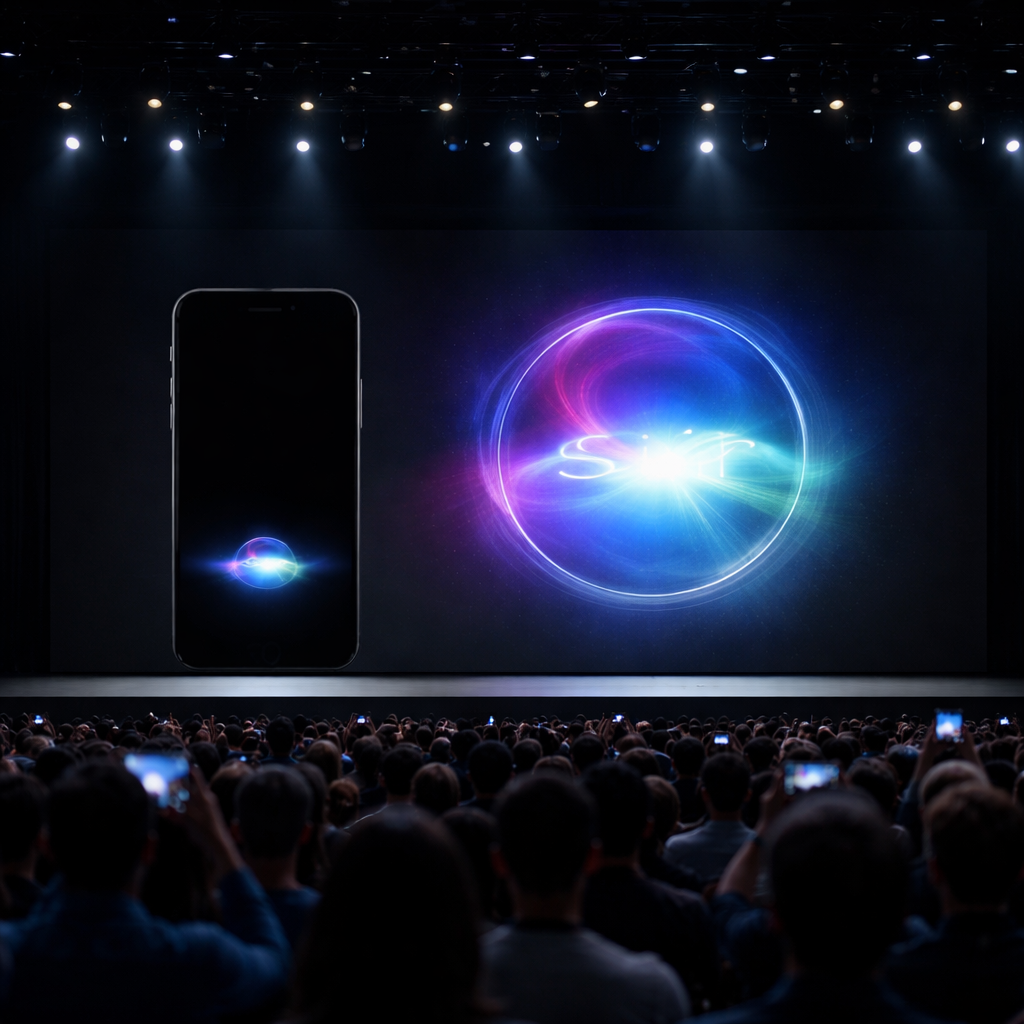
Apple introduced a completely rebuilt Siri AI at its annual Worldwide Developers Conference, marking what IDC analysts describe as "Apple's AI credibility test" in a June 12, 2026 report. The centerpiece announcement is Siri AI, which runs on Apple's own third-generation foundation models rather than relying on Google's Gemini chat infrastructure. The report notes this was Tim Cook's final WWDC keynote before John Ternus takes over as CEO, making the launch a pivotal moment for Apple's transition into AI-driven personal computing.
The new Siri AI arrives as a standalone app across iPhone, iPad, Mac, and Vision Pro with an iMessage-style interface, persistent conversation bubbles, and full chat history synced through iCloud. Users can attach images and documents and switch between quick voice commands and deeper chatbot mode. Apple partnered with Google to develop the model family and refined four of the five models using outputs from Gemini's frontier models, but the models, training data, and privacy architecture all belong to Apple. While some Apple Intelligence capabilities like image generation will run on Google's Cloud Platform on NVIDIA chips, none of the new Siri AI runs on Gemini's infrastructure. The assistant now lives inside the Dynamic Island instead of using the edge glow that signaled Siri for years, making it feel like part of the hardware rather than something that hijacks the screen. Apple added features like "write with Siri AI," which picks up on user writing style and produces complete drafts, and Visual Intelligence mode in the Camera app that reads nutrition labels and logs calories straight into Health or pulls phone numbers off business cards into Contacts.
According to the IDC report, "Apple has rarely been about being first to a trend. It has been about waiting for the ability to embed technology far enough into hardware and silicon to change how people actually behave." The analysts write that Siri AI "appears to finally do what Apple suggested it would be capable of doing back in 2024," reading personal context across emails, photos, messages, and files while executing multi-step tasks across apps. The report emphasizes that Apple's access to years of contextual user data gives it "a true advantage" over competing AI services like OpenAI's ChatGPT and Anthropic's Claude, which are only now collecting that information. IDC notes Apple is shipping the feature as a preview, gated behind a waitlist even among developer beta users, with advanced parts of the stack expected to arrive across later updates rather than at launch.
The strategic implications center on ecosystem lock-in and upgrade momentum. The report explains that Apple's strength has been "to package complex technology into experiences that feel polished and trusted," positioning AI as part of the operating system rather than a separate app destination. IDC analysts argue that personal context is Apple's unique advantage, but one the company must leverage carefully given its privacy promises. Because iPhone 15 and older users lack all access to Apple Intelligence, the report states this creates "a compelling argument to upgrade" for users who resisted due to economic uncertainty, driving "continued upgrade momentum in 2026, despite a very strong upgrade cycle last year." A Siri AI experience that works the same way across every device gives Apple an advantage other vendors will find difficult to replicate.
IDC frames 2026 as a high-stakes year for Apple, noting the company deliberately avoided the word "agentic" and focused on delivering a polished experience over experimental capability. The analysts write that consumers "will judge it by whether Siri AI understands them, whether actions work, whether personal context feels useful rather than intrusive, and whether the experience is consistent across devices." For incoming CEO John Ternus, who has deep hardware DNA, the opportunity is to make Apple Intelligence feel inseparable from Apple devices. If Apple delivers with the reliability and trust users expect, the report concludes, this could be remembered as the moment Siri AI moved from the background of Apple's product lineup to the center of its future.