
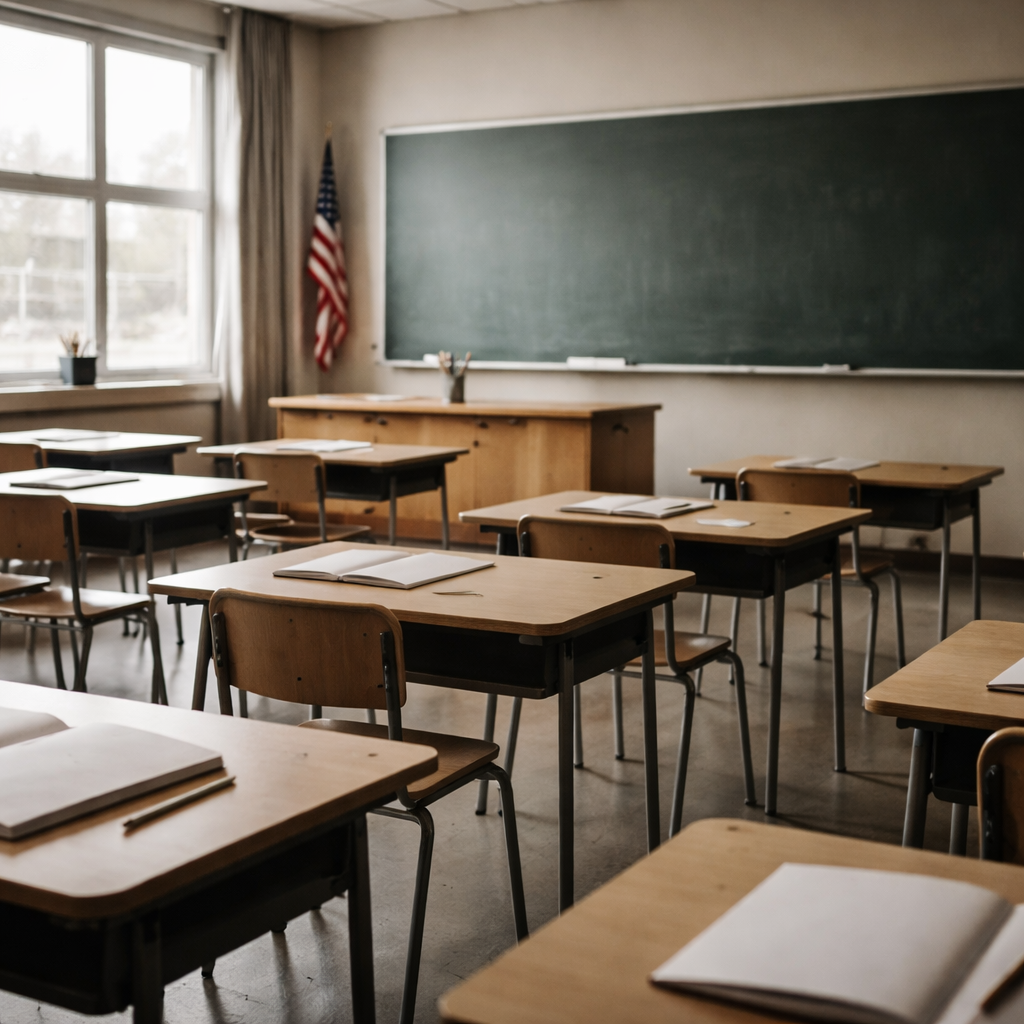
After decades of steady growth, U.S. public schools have lost 1.18 million students over the past five years—a 2.3 percent drop with no signs of recovery. In an opinion piece published June 9, 2026, by The Heartland Institute, Larry Sand argues that government-run schools are shedding students because many aren't offering a worthy product. The analysis examines enrollment declines, chronic absenteeism rates, and the growing shift toward private schools and alternative education.
The data reveal sharp enrollment losses in major states and cities. California lost nearly 75,000 K-12 students in the 2025-26 school year alone—more than twice the previous year's decline—and has seen a 10 percent drop since 2017-2018. New York City enrolled 793,300 students in 2025-26, down nearly 10 percent from 2020. Chronic absenteeism—students missing 10 percent or more of the school year—surged from 15 percent pre-COVID to 28 percent in 2022 and remains elevated at 24 percent as of January 2026. The crisis hits hardest along racial lines: 39 percent of Black students, 36 percent of Hispanic students, 24 percent of white students, and 15 percent of Asian students are chronically absent. Only 48 percent of middle and high school students surveyed in 2024 said they feel motivated to attend, and 64 percent of teens called school boring. Nearly 64 percent of school parents said K-12 education is headed in the wrong direction, up 8 points from 2023.
According to education policy consultant Marc Oestreich, quoted in the piece, students are responding to schools that "fail to teach them to read, fail to adapt to their needs, and fail to demonstrate that another day in the building is worth their time." The report notes that lower birth rates are the primary driver of the downturn, with 690,000 fewer children born in 2024 than in 2007. But Oestreich argues the honest story isn't that parents have become irresponsible or students have lost their work ethic—it's that many families "have concluded from direct experience that what their local public school offers is not worth the time."
While public schools struggle, alternatives are growing fast. Private school choice programs now exist in 34 states, serving more than 1.5 million students across 75 programs. The Federal Tax Credit Scholarship Program, taking effect January 1, 2027, offers taxpayers up to $1,700 in dollar-for-dollar credits for donations to scholarship organizations that fund private school tuition, supplies, and other expenses for families earning below 300 percent of area median income. Thirty-one states have opted in so far. The program is especially popular among Black and Hispanic communities—68 percent of Blacks and 63 percent of Hispanics support a private option. Homeschooling grew 5.4 percent during 2024-2025, nearly triple the pre-pandemic rate of 2 percent. Micro-schools, where classes typically have fewer than 15 students with tailored curricula, now educate roughly 750,000 students—about 2 percent of the U.S. student population. The median micro-school size has grown from 16 students in 2024 to 22 today, with some serving as many as 100 students.
The takeaway is clear: except for falling birth rates, public schools are losing students because families don't see value in what they're being offered. As choice programs expand and alternatives multiply, the exodus is likely to accelerate—leaving traditional districts scrambling to prove they're still worth showing up for.