
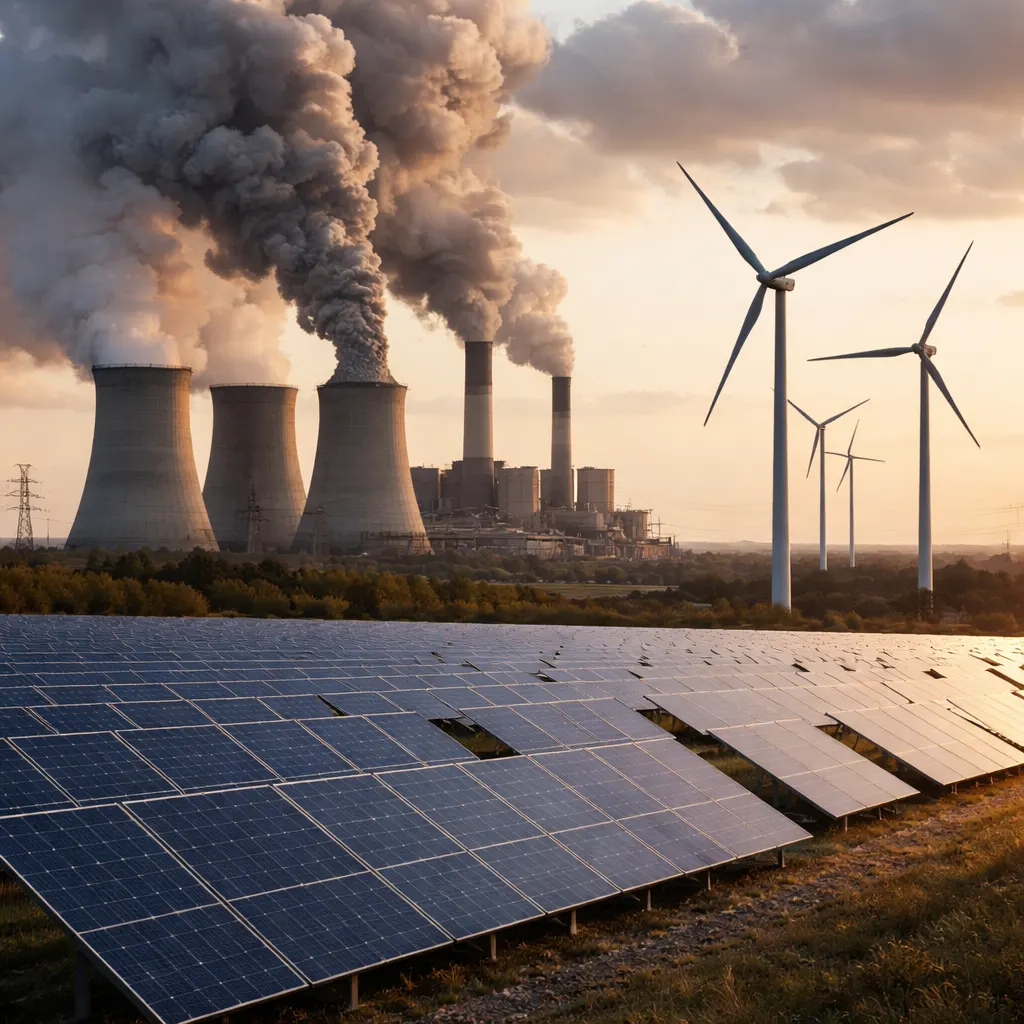
The Trump administration's energy policies could eliminate between 390 gigawatts and 540 gigawatts of new wind, solar, and energy storage capacity over the next ten years, according to projections released Wednesday by the Natural Resources Defense Council. The environmental group attributes the potential shortfall to a combination of factors including the rollback of Inflation Reduction Act tax credits, new tariff policies, and buybacks of offshore wind leases. Amanda Levin, NRDC's director of policy analysis, said the modeling shows "we lose more than half of everything that we expected to be able to build with the combination of market forces and proactive policy."
The NRDC report warns that these lost renewable projects won't be offset by alternative power sources, with at most 9 gigawatts of additional gas capacity expected under Trump's policies. The organization points to near-term supply chain constraints for gas turbines, unpredictable fuel costs, and the competitive pricing of renewables compared to gas as reasons for the modest gas buildout estimate. A separate August report from Global Energy Monitor found 189 gigawatts of gas-fired capacity currently in announced, pre-construction, and construction phases in the U.S., a figure that nearly doubled in the first half of the year, though uncertainty remains about how and when this capacity will actually be built.
The power sector will spend between $5 billion and $15 billion more on fossil fuels while claiming $45 billion less in IRA tax incentives, relative to NRDC's January 2025 baseline scenario, the report states. By 2035, average household electricity rates are projected to climb an additional 4.2% to 5.5% nationwide as the country relies more heavily on the existing, higher-cost legacy fossil fuel system in the absence of new renewable generation. The Global Energy Monitor report noted that two-thirds of gas-fired capacity in development globally, and more than half of projects tied to data centers, don't have a named turbine or engine manufacturer, while nearly one-quarter of data center projects lack a named start year.
Levin explained that supply chain bottlenecks are forcing developers who need to bring reliable power online quickly to turn to simple-cycle or reciprocating engine plants rather than combined-cycle facilities, which are less efficient and produce higher emissions per unit of electricity. She argued this trend demonstrates why the Environmental Protection Agency's gas power plant emissions rule shouldn't be repealed, despite the Trump administration's stated intention to do so. "The market is not acting in a perfectly rational economic way," Levin said, adding that such regulations "could prevent this type of highly polluting type of power generation." Despite the projected losses, the NRDC modeling still anticipates significant growth in renewables under the current administration, just at roughly half the pace that market forces and supportive policies would have enabled. The report frames higher electricity costs and continued reliance on fossil fuels as the price Americans will pay for stepping back from renewable energy expansion.