
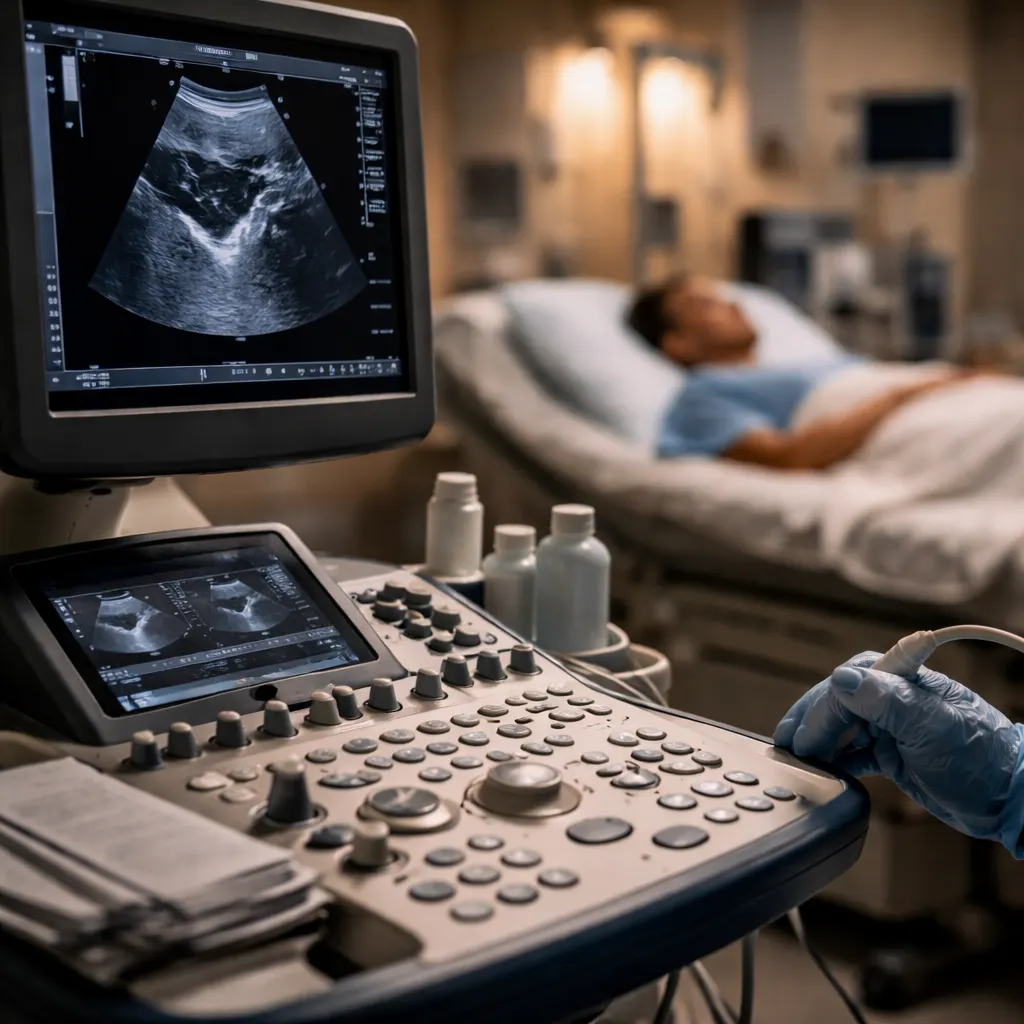
Medicare pays hospitals $339 for an ultrasound that costs just $164 at a physician's office, even when both deliver identical care with equal safety, according to an analysis published by the Georgia Public Policy Foundation. The report examines how federal health insurance reimburses hospital-owned outpatient facilities at significantly higher rates than independent medical practices for routine procedures, creating a price gap that affects both taxpayers and patients. This payment structure has traditionally favored hospitals for the same care, regardless of where it's actually performed.
The disparity extends across common medical services, with Medicare paying $800 for a biopsy at a hospital facility compared to $150 at an independent office, figures cited by House Ways and Means Committee Chairman Jason Smith at an April congressional hearing. Private insurance follows a similar pattern, with commercial insurers paying 31% more for clinic visits at hospital outpatient departments than at physician offices in 2022, according to Blue Cross Blue Shield Association data cited in the report. The gap widens dramatically for diagnostic services: chest X-rays cost 238% more and prostate biopsies cost 563% more when performed in hospital settings rather than independent facilities.
In July, the Centers for Medicare and Medicaid Services proposed a rule to shrink this imbalance by extending "site-neutral" payment policy to imaging services performed without contrast dye—ultrasounds, CT scans, MRIs, and X-rays. Under the proposal, off-campus hospital outpatient sites would receive the same fee schedule rate paid to independent physician offices, rather than the higher hospital rate currently applied. The Centers for Medicare and Medicaid Services estimates the change would save Medicare and its beneficiaries a combined $260 million in the first year, including roughly $70 million in reduced out-of-pocket expenses for seniors.
These savings reveal a much larger problem, the report notes. MedPAC, the independent commission advising Congress on Medicare payment policy, has calculated that more broadly aligning payment rates toward site neutrality across outpatient settings could have reduced Part B spending by $6 billion and saved Medicare beneficiaries $1.5 billion in out-of-pocket costs in a single year. Hospitals argue they face costs independent facilities don't—primarily running 24/7 emergency care for uninsured patients—and that their outpatient departments treat sicker, more complex patients. But the report says these claims don't hold up: nonprofit hospitals already receive tax exemptions in exchange for providing emergency services regardless of ability to pay, and MedPAC's analysis found that patient severity differences between hospital outpatient departments and physician offices are actually small, with targeted services like ultrasounds tending to be low-complexity from the start. The proposed rule marks a recognition that patients shouldn't pay more based on who owns the building where their care happens.