
North Carolina could face a housing shortage of over 764,000 units by 2029, according to a 2024 housing needs assessment cited in a new policy analysis published by the John Locke Foundation on June 17, 2026. The report, written by Kelly Lester, a policy analyst at the foundation, examines Senate Bill 445, which would legalize accessory dwelling units and allow residential development in commercially zoned areas across the state. The analysis describes the legislation as "one of the most significant pro-supply housing reforms considered by the General Assembly this session."
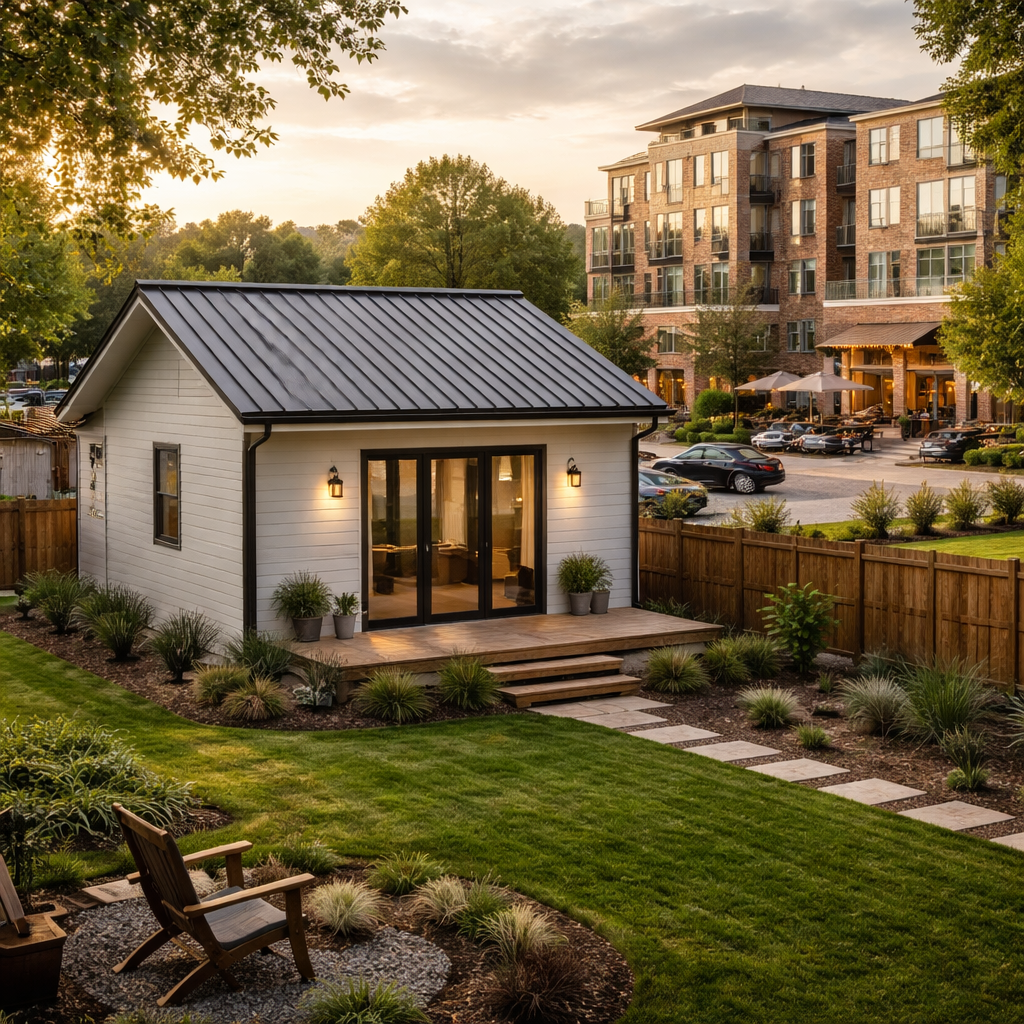
SB 445 would require local governments to allow at least one accessory dwelling unit—backyard cottages, garage apartments, or granny flats—on residential lots where single-family homes are already permitted. The bill would prohibit local governments from requiring homeowners to live on the property, forcing developers through lengthy discretionary approval processes, or limiting an ADU to less than 800 square feet. The legislation would also require local governments to permit residential structures and multifamily developments in areas zoned for nonagricultural commercial, business, and industrial uses while establishing a minimum allowable height threshold of 60 feet. Affordability has declined in all 100 North Carolina counties as demand continues to outpace housing construction, according to the report.
"ADUs are one of the simplest ways to add housing supply," the report states, noting that they can often be produced at a lower cost than entirely new housing developments because they're built on existing lots with existing infrastructure. California saw annual ADU permits increase from roughly 1,300 units in 2016 to more than 28,000 units annually after statewide reforms reduced local barriers to construction, the analysis notes. According to the John Locke Foundation report, large amounts of commercially zoned land across North Carolina sit underutilized, with aging strip malls, vacant shopping centers, declining office parks, and oversized parking lots occupying land with existing infrastructure that local zoning rules frequently prohibit housing from being built on.
The report cites economic research showing that building 100 new market-rate apartments opens up roughly 70 units in below-median-income neighborhoods through a chain of moves over time, a process researchers call "filtering." Other research has found that new housing construction lowers rents in nearby neighborhoods and slows rent growth across local housing markets, according to the analysis. The report argues that in many North Carolina jurisdictions, developers are often required to obtain special-use permits, conditional rezoning approvals, site plan reviews, or other discretionary approvals that can face months or even years of delays. "This uncertainty increases financing costs, discourages investment, and ultimately raises housing prices by making new housing more expensive to build," the report states.
The John Locke Foundation analysis recommends that lawmakers pursue broader reforms beyond SB 445, including by-right multifamily development where projects that comply with objective zoning standards receive administrative approval without requiring special permits or political approval from local elected officials. The report points to California's 2021 SB 9 and last year's North Carolina SB 497, which would have removed single-family zoning in residential areas by allowing by-right approval for quadplexes and below, as models for more comprehensive reform. "Housing becomes more affordable when more housing gets built," the report concludes, but warns that North Carolina's housing shortage remains too large for incremental reforms alone.