
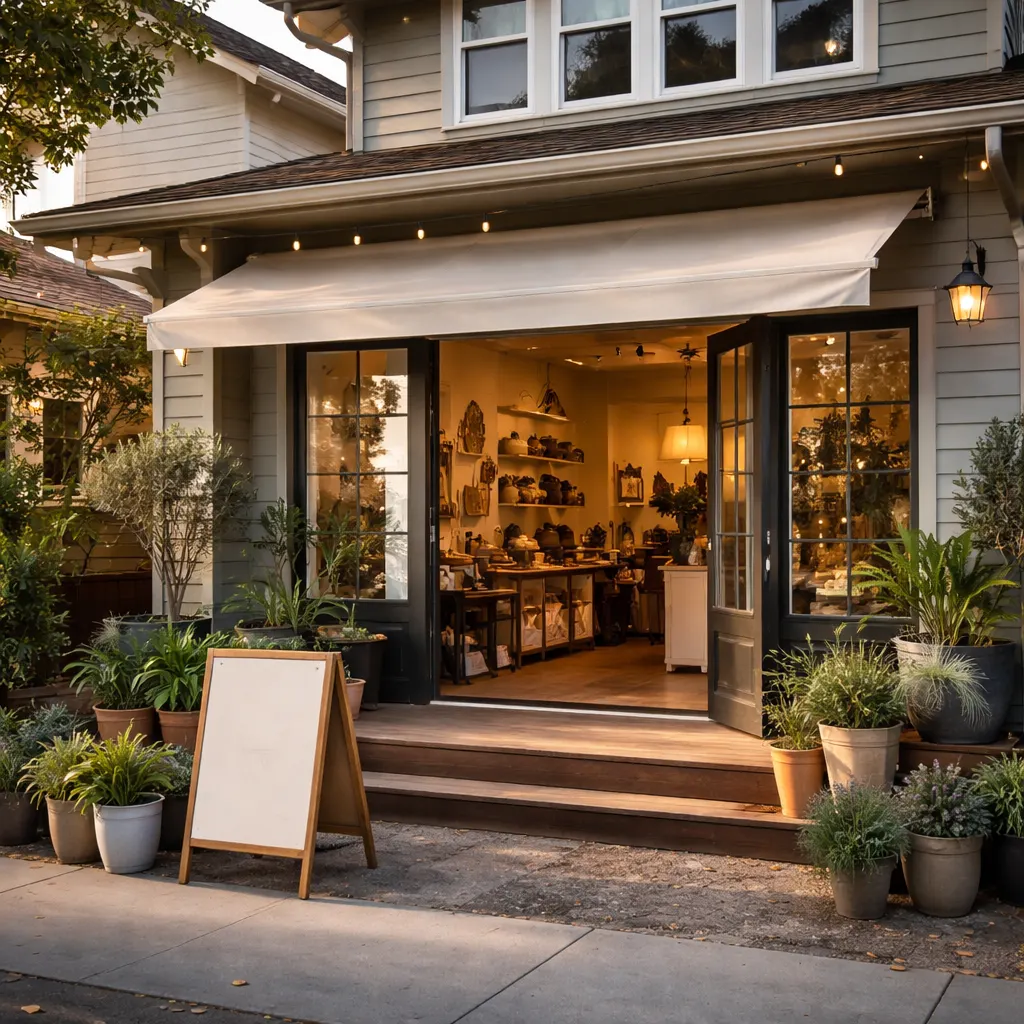
At least eight cities across the United States have legalized accessory commercial units — small businesses run from homes or garages — with three state legislatures introducing bills to allow the practice statewide, according to an analysis published July 17, 2026 by the Pacific Research Institute's Free Cities Center. The report tracks a nascent movement to reverse decades of zoning restrictions that eliminated neighborhood storefronts, driven by the remote-work transition and bipartisan support for deregulation.
Raleigh became the first major city to go "big and broad" in 2022, modifying its zoning code to allow ACUs "contained within or attached to a residential structure" without requiring entrepreneurs to obtain special-use permits — a process that was "a sometimes lengthy and expensive endeavor that often required hiring an attorney," according to the report. Seattle and Muskegon, Michigan, unanimously approved ACUs in 2025, while Austin amended its code in March 2026 to create a category for commercial establishments up to 200 square feet. Spokane pioneered the concept earlier with a limited 2013 initiative covering just under 100 properties that were originally built for commercial use, while Pomona, California, approved garage-based businesses as part of a 2024 zoning overhaul. Berkeley tasked its planning commission in January 2024 to create ACU regulations, but the report notes the rules haven't emerged after two and a half years, with ACU legalization ranking as the city council's 8th priority among 36 competing policies.
The report attributes the term "accessory commercial units" to Portland planner Neil Heller, who credits colleague Garlynn Woodsong for its creation. New Hampshire Rep. Joe Sweeney, who sponsored a 2026 ACU bill that didn't become law, told researchers his motivation was "allowing people to unlock their own American Dreams" by starting businesses at home rather than paying for retail space in strip malls, citing "those great American stories of people building companies in their garages or their basements." The Austin Board of Realtors endorsed its city's revision, saying "Front Yard Businesses give everyday Austinites the opportunity to build wealth and explore entrepreneurial ventures without taking on the risk and expense of commercial space."
The report explains that interest in ACUs mounted during the COVID-19 lockdown, when tens of millions of employees were furloughed or ordered to work from home, though Spokane pursued its initiative several years earlier. Cities once "enjoyed numerous small retail and commercial stores peppered throughout the neighborhoods," but over decades most were "abandoned, converted, or rezoned" and blocked from restoring commercial activity — a process that afflicted most of urban America, according to the analysis. Most cities limit operating hours (typically 7 am to 7 pm or 10 pm), prohibit certain uses like firearms sales or restaurants with outdoor seating, and restrict noise, odor, and traffic impacts. Raleigh allows businesses ranging from dry cleaners to clothing manufacturers and music studios, while Pomona bans "equipment or process" that creates disturbances "detectable to the normal senses, off the premises."
The report concludes that NIMBYs will likely "offer unhinged, and inaccurate, worst-case scenarios" as ACU momentum builds, but predicts neighborhood commerce might evolve "from a curiosity to an inevitability" given its embrace by both the urbanist left and pro-capitalism right, the remote-work transition, and a rapidly aging population seeking amenities close to home. Whether the effort prospers or withers "will reveal much about land-use reformers' ability to overcome the status-quo lobby and continue to shift zoning in a deregulatory direction," the report states.