
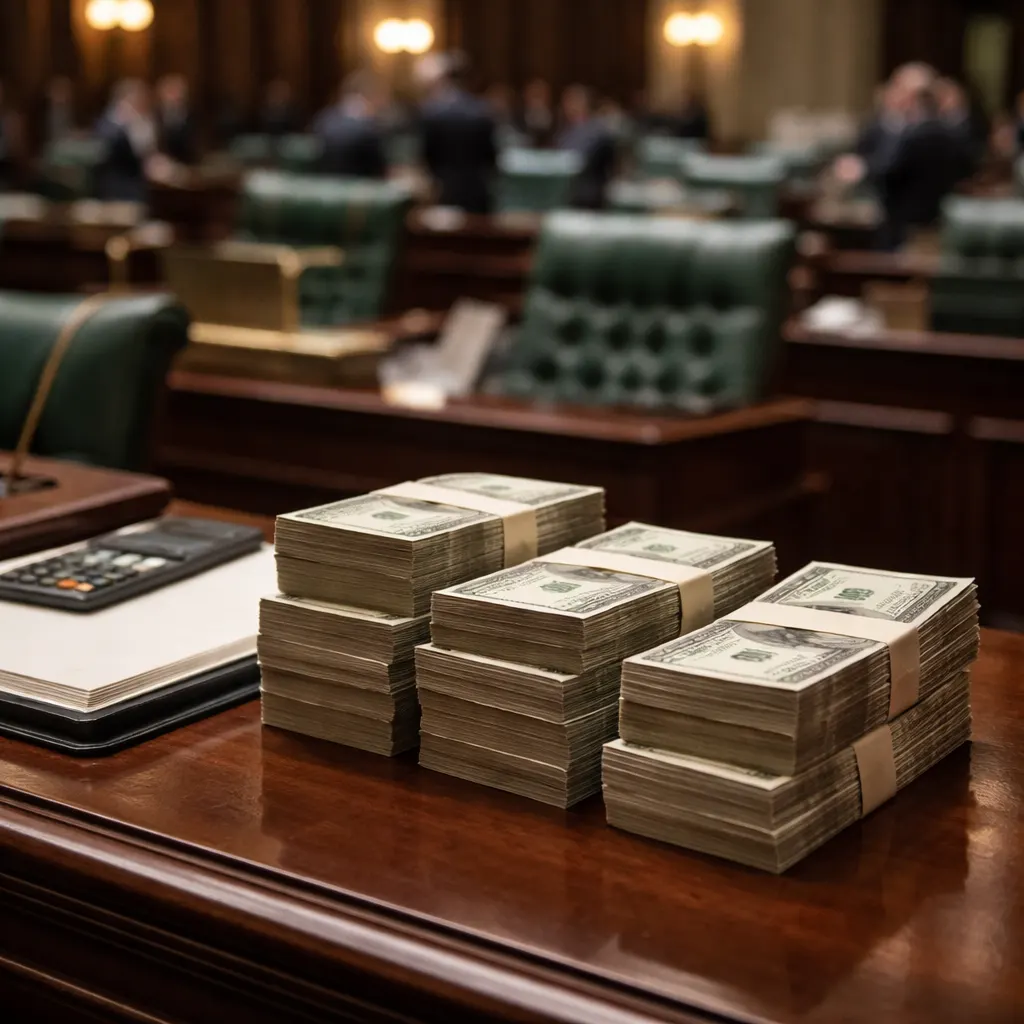
Illinois state legislators have pushed their base pay to $101,450, making them the fourth-highest paid state lawmakers in the country, according to a report published June 23, 2026 by the Illinois Policy Institute. The raise was included in the budget Gov. J.B. Pritzker signed June 16. When meals, lodging, and bonuses for leadership and committee positions are added in, the average total compensation will be just under $134,000.
The pay increase represents a dramatic jump for Illinois lawmakers in recent years. Since Pritzker took office in early 2019, Illinois lawmakers have given themselves raises totaling nearly $34,000 in base pay. That's a nearly 50% increase, far outpacing the 30% rise Illinoisans have seen in that time. The six-figure salary marks a sharp acceleration in legislative compensation during the current administration's tenure.
Pritzker argues that higher pay will help attract and retain talent in government, according to the report. Others contend that well-paid lawmakers "are less susceptible to corruption and can devote more time to constituents." However, the report notes that despite their high pay, Illinois was the second-most corrupt state in a late 2023 report as measured by federal corruption convictions since 1976. The report points to Michael Madigan, 84, as the face of Illinois corruption, who ruled the Illinois House for 36 years, longer than any legislative leader in U.S. history. A federal jury found Madigan guilty on 10 counts of bribery, conspiracy and wire fraud, with a federal appeals court upholding his conviction on April 27.
The Illinois Policy Institute's analysis suggests that higher salaries haven't solved the state's corruption problems. The report explains that Madigan used his office to reward allies with no-show jobs and contracts in exchange for favorable legislation, with a U.S. District Judge calling it "abuse of power at the highest level." The report argues that paying lawmakers well cannot eliminate corruption, pointing to the fact that even with salaries approaching $135,000 in total compensation, Illinois still ranks near the top for corruption nationwide. The state's experience with Madigan demonstrates how political power can be converted into personal gain regardless of compensation levels.
The report concludes that Illinois can combat corruption by tightening lax conflict-of-interest rules, recommending that lawmakers should be barred from working as lobbyists and property tax attorneys. According to the analysis, despite passing almost 400 bills this session, lawmakers boosted their own pay while fumbling opportunities to lower taxes and increase the state's housing supply. The message is clear: structural ethics reforms, not just higher paychecks, are what Illinois needs to clean up its government.