
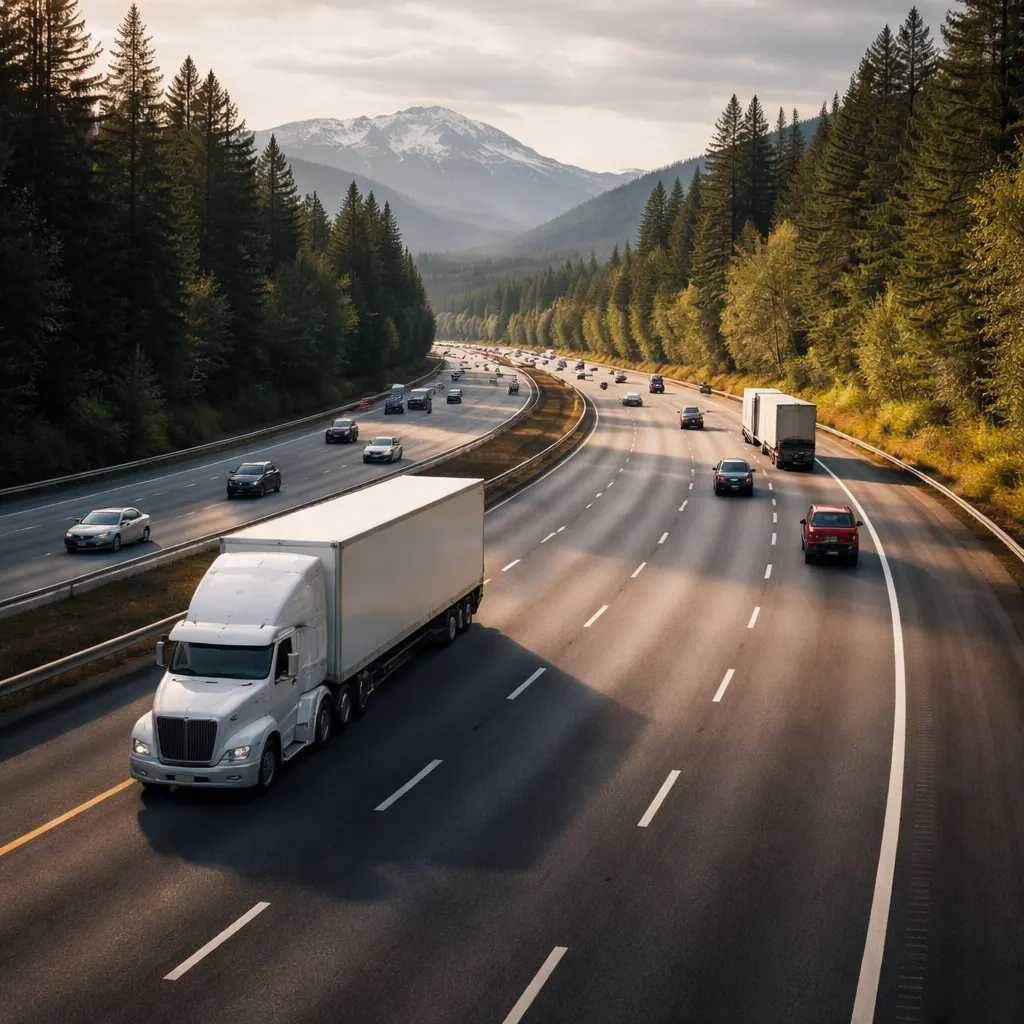
Oregon's highway system placed 33rd in the nation for overall cost-effectiveness and condition, climbing two spots from last year's 35th-place ranking, according to the 29th Annual Highway Report published by Reason Foundation. The report evaluates state-controlled highways across 13 categories, including pavement and bridge conditions, traffic fatalities, congestion, and spending. Oregon showed mixed results, performing well in some infrastructure quality measures but struggling with high fatality rates and spending levels.
The state's highways earned a 15th-place ranking in rural interstate pavement condition and a 19th-place ranking for urban interstate pavement, while rural and urban arterial pavement condition came in at 24th and 23rd, respectively. Oregon ranked 15th for structurally deficient bridges but fell to 47th for rural fatality rate and 36th for urban fatality rate. Drivers in Oregon spend roughly 27 hours annually stuck in traffic congestion, placing the state 34th nationwide in this measure. On spending, Oregon ranked 40th in capital and bridge disbursements—the costs of constructing new roads and bridges and expanding existing ones—and 41st in maintenance disbursements, which cover repaving roads and filling potholes. Administrative disbursements, including office expenses that don't reach roads directly, ranked 40th. The state's biggest improvement came in urbanized area congestion, jumping from 41st to 34th, and in maintenance disbursements, rising from 47th to 41st. The sharpest decline was in capital and bridge disbursements, dropping from 34th to 40th.
According to Baruch Feigenbaum, lead author of the report and senior managing director of transportation policy at Reason Foundation, Oregon should prioritize reducing its rural fatality rate and maintenance disbursements to improve road condition and performance. The report notes that while the state performs well in rural interstate pavement condition, structurally deficient bridges, and urban interstate pavement condition, "its high Rural Fatality Rate (47th) and high spending remain areas of concern." When compared to neighboring states, Oregon's overall highway performance surpasses Washington's 48th-place ranking, California's 49th, and Alaska's 50th, but trails Nevada at 25th and Idaho at 26th.
The report relies on data each state submitted to the Federal Highway Administration for 2023, supplemented by deficient bridge information from Better Roads and Bridges and congestion data from INRIX. In performance categories, a first-place ranking indicates the best outcome—such as the lowest fatality rate or highest pavement quality—while 50th represents the worst. For cost-effectiveness categories, first place means the state spends the least, and 50th indicates the highest relative spending. The methodology allows direct comparisons between states with similar populations and geographic neighbors to identify where Oregon stands among its peers.
The report's findings suggest Oregon faces a balancing act between maintaining acceptable infrastructure quality and controlling costs. With rural fatalities remaining a persistent problem and spending levels ranking in the bottom fifth of states, the state will need to address safety issues without dramatically increasing expenditures. Among similarly populated states, Oregon outperforms Oklahoma's 45th-place ranking but lags behind Kentucky at 15th, indicating room for improvement in how efficiently the state manages its highway system.