
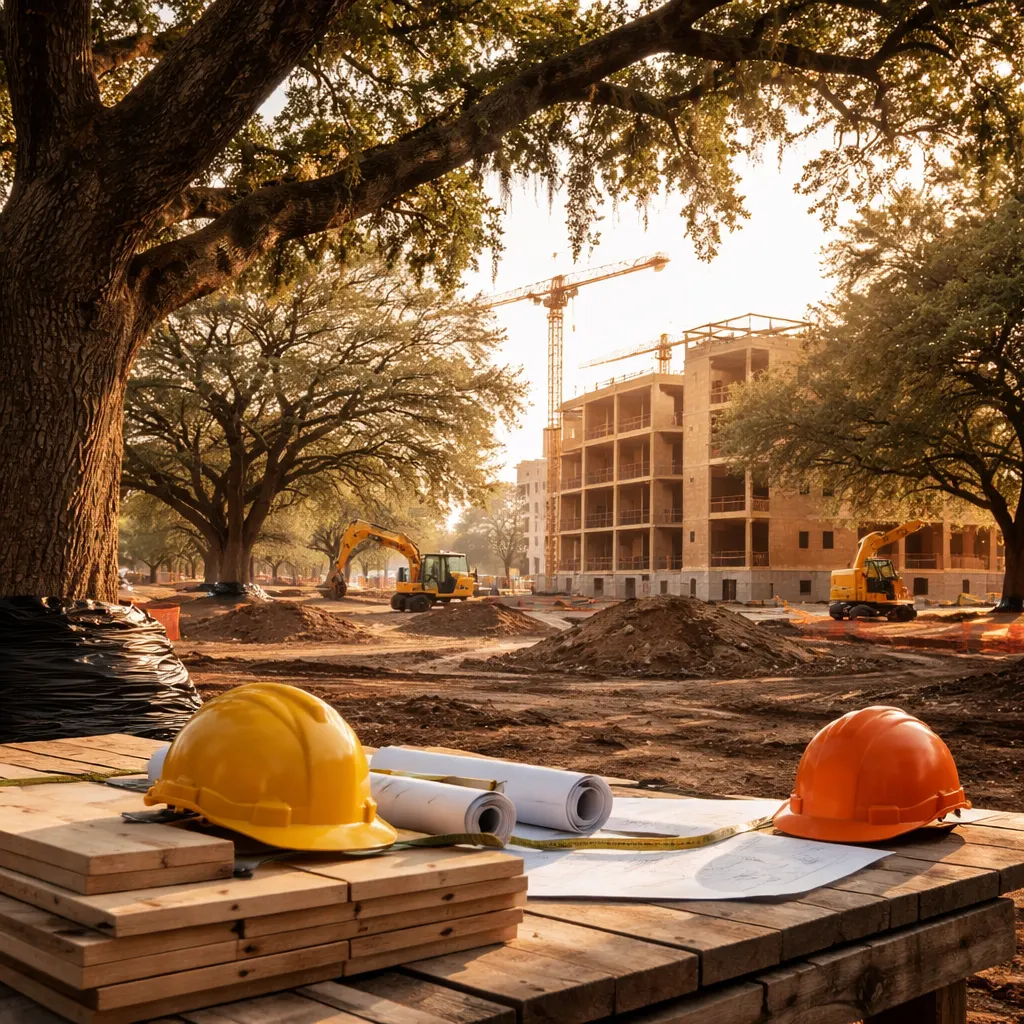
A property owner in Oakland, California, faced a $915,000 mitigation fee after removing diseased and fallen trees identified as fire hazards—nearly five times what the lot itself was worth. The demand came from a new report published by the Texas Public Policy Foundation, which argues that local tree ordinances nationwide are driving up housing costs by shifting the expense of public environmental benefits onto individual homeowners. The publication examines how municipal tree preservation rules impose fees that can halt development and price would-be builders out of the market.
The report details multiple instances where tree removal triggered enormous costs. In Michigan, a township demanded over $400,000 from two brothers who cleared a portion of their property. An Austin homeowner was recently billed thousands of dollars simply for trimming trees on his own land. Oakland's ordinance requires property owners to pay into a municipal tree fund before securing building permits, and a lien is placed on the property until the fee is settled—which in Matthew Bernard's case meant his homeownership plans collapsed. In another case highlighted by the report, a property owner was charged approximately $47,000 for removing trees from a ditch on his land, even though the city acknowledged the removal actually reduced flooding and other nuisance problems in the area.
According to the report, these ordinances raise serious constitutional questions because they extract public benefits without public funding. The authors argue that while trees provide shade, wildlife habitat, flood control, and aesthetic value, the cost of preserving those communal advantages shouldn't fall on a single private citizen trying to build a home. The report notes that courts have repeatedly ruled land-use permits must address actual harms caused by development, not serve as opportunities for governments to secure unrelated public benefits they would otherwise fund themselves. Most tree ordinances, the publication contends, charge preset fees based on the number or size of trees removed, regardless of whether the removal causes any genuine harm—focusing instead on compensating the government whenever environmental benefits are reduced. The 6th U.S. Circuit Court of Appeals recently struck down one such ordinance as unconstitutional because it lacked a sufficient connection to any actual damage.
The report explains that every new regulatory requirement increases development expenses, and those costs eventually appear in housing prices—a straightforward cause-and-effect the authors frame as simple math. Tree ordinances are presented as just one example of a broader pattern where land-use regulations pursue public goals at private expense, similar to Arlington's recent rules forcing certain apartment developments to include swimming pools or Killeen's requirements for decorative garage doors and eyebrow windows in new homes. The report warns that existing homeowners enjoy the benefits of undeveloped, tree-covered lots in their neighborhoods while the owner of an undeveloped lot is effectively forced either to leave the property empty or pay thousands—sometimes hundreds of thousands—of dollars before building. The authors recommend that if governments want public environmental benefits, they should purchase parkland, preserve open space through easements, or plant trees on public property, spreading costs across the community rather than hiding them in the price of a new home.