
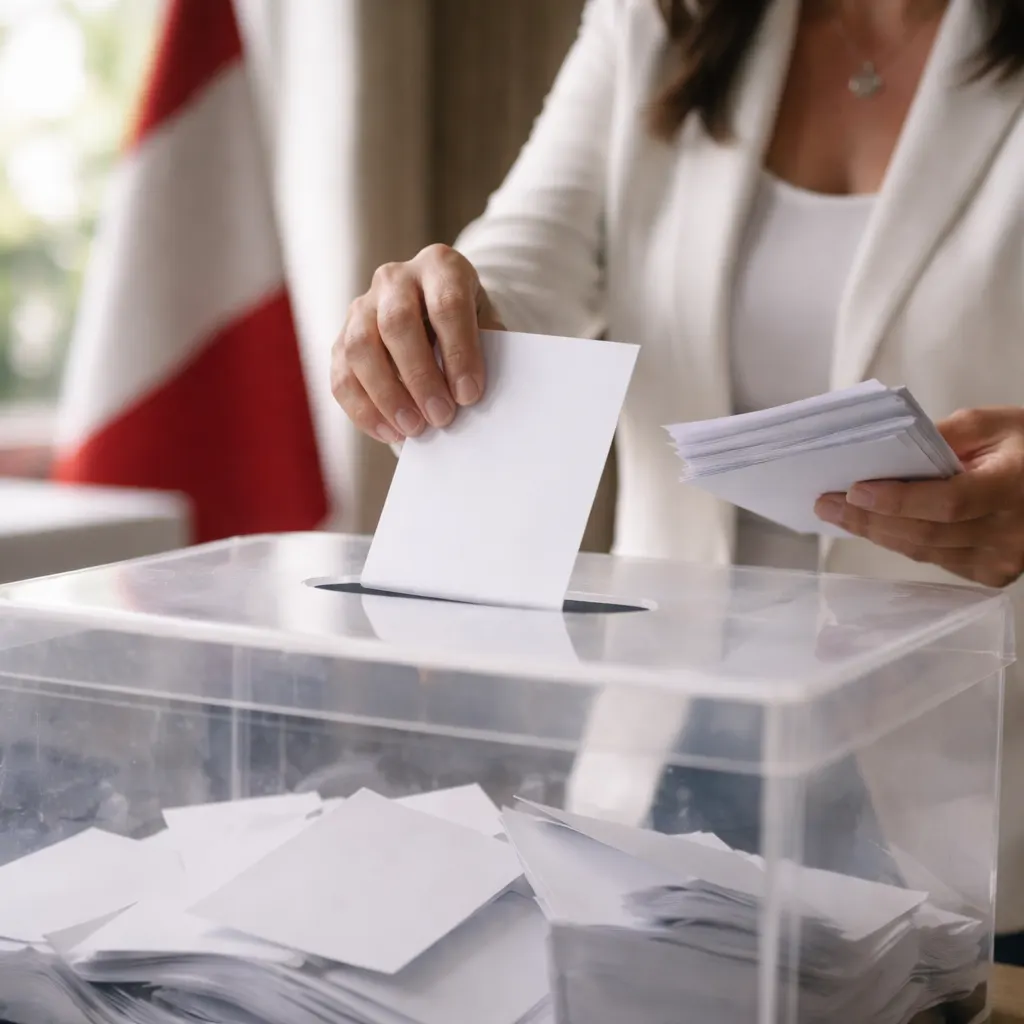
With just over 99% of ballots counted, Keiko Fujimori holds a lead of roughly 40,000 votes over Roberto Sánchez—less than half a percentage point—marking Peru's third consecutive presidential contest decided by a margin that narrow. An analysis published Tuesday by the Foundation for Economic Education examines Fujimori's narrow victory and what her presidency means for a deeply divided nation. After losing three previous runoffs by margins under a single percentage point, Fujimori has finally won her fourth presidential bid, though the outcome raises questions about whether such a slim victory constitutes a mandate to govern or merely a turn to occupy the office without real power.
Sánchez led through the early days of counting, carried by rural and highland turnout, but overseas votes broke for Fujimori above 63%, pulling the result the other way as the tally crossed 95%. The electoral split followed sharp geographic and demographic lines: urban, affluent, and overseas Peruvians backed Fujimori decisively, while rural and indigenous communities supported Sánchez by margins in some areas as wide as 85%. Fujimori has never held executive power before this victory. She served as First Lady during the latter half of the 1990s under her father Alberto Fujimori, who governed Peru from 1990 to 2000, then worked as a congresswoman from 2006 to 2011 and has led the Fuerza Popular party since. She spent 13 months in pretrial detention on corruption charges tied to Odebrecht financing before a court voided the case in January 2025.
According to the report, Fujimori's flagship commitments rest on "the two pillars of Fujimorismo itself: a hard line on crime, and an unapologetic defense of the market economy." The security platform proposes deploying the military against organized crime and prison disorder, taking inspiration from Peru's own recent past and Nayib Bukele's tactics in El Salvador, while expanding video surveillance and using artificial intelligence to detect corruption in public contracting. The economic platform promises a deregulatory shock: cutting investment-approval timelines by 40%, reducing the fiscal deficit from 2.2% to 1% of GDP, and shrinking the state. The report notes that both pillars were sold on a single word repeated at her closing rally and final debate: order, against the chaos she says the left represents. That framing carried the affluent, urban, and overseas vote decisively but did less among rural and indigenous communities who associate the Fujimori name with her father's abuses of the 1990s.
The narrow margin has sparked intense division. Thousands marched across Lima, Arequipa, and Huancayo in the campaign's final weeks under the banner of "Keiko Out, Fujimori Never Again," led in part by relatives of her father's victims, and protests continued into the count itself. As Fujimori's lead widened past 98% reporting, civic groups including Generación Z Perú called for fresh demonstrations in defense of rural voters, while social media commentators accused electoral authorities of distorting the count—an echo of the fraud allegations Fujimori herself made without evidence in 2021, now redirected at her by the other side. The report describes this as "a perilous place for a nation when the Loser's Consent necessary for democracy to function collapses entirely." Urban and overseas Peruvians have largely framed the result as a vote for stability, while rural and indigenous communities see it as a re-imposition of an elite their parents fought against.
On international trade, Fujimori's platform preserves existing agreements and favors deepened ties with Washington, including pressuring the outgoing government to honor a contested multi-billion dollar F-16 purchase from the United States. Yet Atlantic Council analysts now expect a more pragmatic posture than her pro-Washington reputation suggested: she's avoided explicitly siding against China, recognizing that Beijing remains one of Peru's principal trading and investment partners through the Chancay megaport and mining concessions. Peru remains the world's second-largest copper producer and a major exporter of gold, silver, zinc, and molybdenum, with rising mineral prices offering Fujimori a more favorable fiscal backdrop than her recent predecessors enjoyed. Whether that windfall reaches the rural communities who voted overwhelmingly against her is the open question her presidency will be measured against.
Fujimori's congressional bloc is large enough this term to insulate her from the impeachment threat that ended four of her predecessors' terms early—a structural stability the report suggests may offset the razor-thin electoral margin. But the deeper challenge remains: the report concludes that Fujimori takes office "having narrowly won the argument over which model Peru should keep, without having won the country that model is meant to serve." The question her presidency now poses isn't whether Peru's market model can survive another term—that's all but certain—but whether a government elected on a margin of 40,000 votes can convince the country it wasn't simply imposed upon it.