
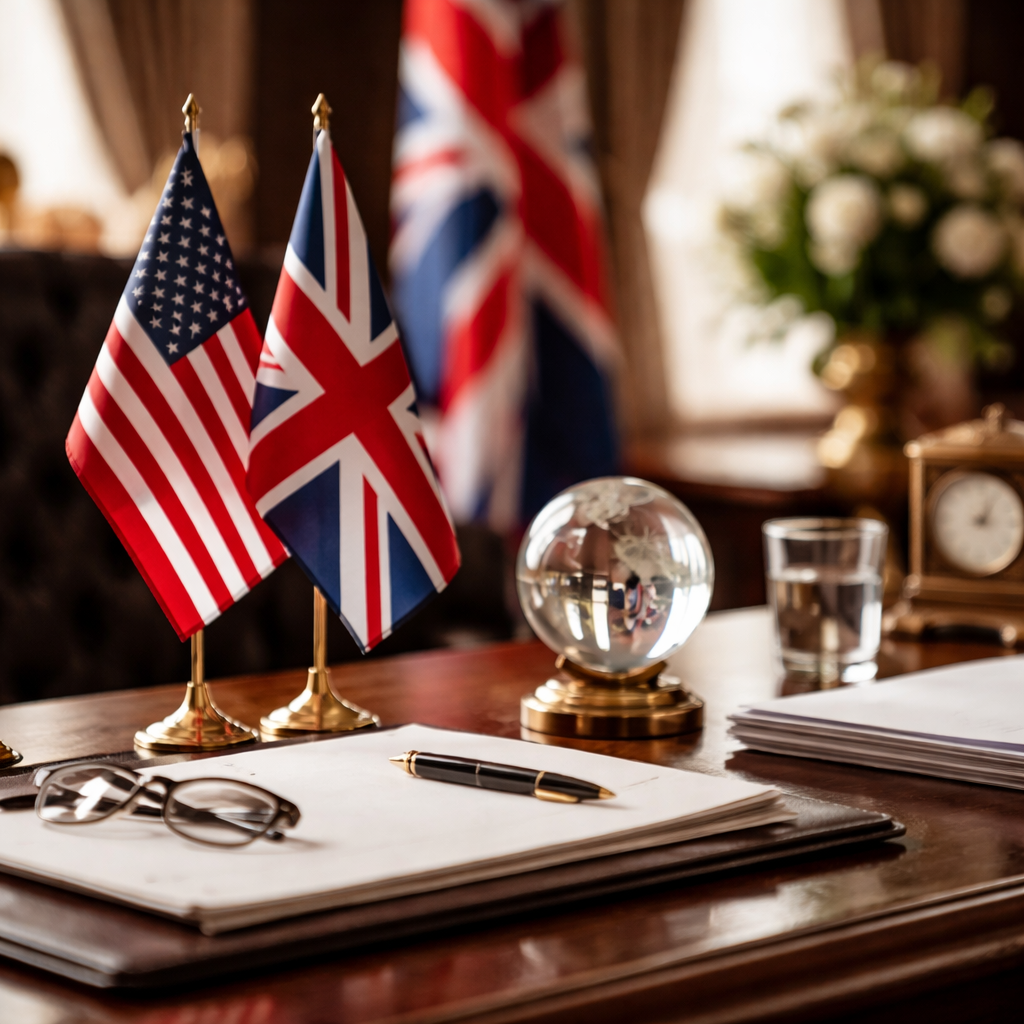
America's network of global alliances functions as a "force multiplier" that enables cost-effective power projection and saves lives, according to an article published June 10, 2026 by the American Legislative Exchange Council (ALEC). The piece, written in response to King Charles III's April address to Congress and Defense Secretary Pete Hegseth's D-Day speech, argues that strategic partnerships represent America's most vital strategic asset—one that adversaries cannot match.
The report points to NATO's response after September 11, 2001, as proof of alliance value. Within 24 hours of the attacks, NATO invoked Article 5 for the first and only time in the alliance's 77-year history, treating the attack on America as an attack on all member nations. At its peak, more than 130,000 soldiers from 51 nations served in the International Security Assistance Force mission in Afghanistan, with countries including Denmark, Canada, Germany, Ukraine, Poland, and Latvia contributing blood and treasure. Public support remains strong: a November 2025 Reagan National Defense Strategy survey found nearly 70% of Americans hold a favorable view of NATO, 62% want Ukraine to prevail against Russia, and 77% believe it's important to defend Taiwan militarily against China. The survey cited "commitments to strategic partners" as the primary reason and "defending democracy and sovereignty" as the secondary motivation.
According to the ALEC report, King Charles told Congress that nations pursue alliances not "out of sentiment" but because "they build greater shared resilience for the future, so making our citizens safer for generations to come." The article notes that Secretary Hegseth observed at Normandy that "strong allies, each fully committed to doing their part win wars." Former Defense Secretary Mark Esper is quoted from October 2020 stating that "our global constellation of allies and partners remain an enduring strength that our competitors and adversaries cannot match." ALEC itself adopted a Resolution Supporting U.S. Commitment to NATO in 2020, and last December passed the Never Forget: September Eleventh Education and Awareness Act model policy.
The report explains that allies provide tangible military advantages by hosting U.S. bases in strategic locations worldwide. U.S. service members injured in the Persian Gulf were recently evacuated to Landstuhl Medical Centre in Germany, adjacent to Ramstein Air Base, which supported the "Coalition of the Willing" during Operation Iraqi Freedom. In the Indo-Pacific, the 2021 AUKUS trilateral pact between the U.S., Australia, and the UK recently announced AUKUS Pillar II to prioritize Uncrewed Undersea Vehicles, cutting-edge weapons systems for regional force projection. Countering China's near-90% control of critical-minerals processing requires cooperation with allies, particularly Australia and Malaysia. The success of U.S. alliances has prompted adversaries to build their own: Iran and China signed a 25-year pact in 2021, Russia and Iran signed a 20-year Comprehensive Strategic Partnership Treaty in January 2025, and all three negotiated a trilateral framework later in 2025 to deepen diplomatic and military cooperation.
The ALEC article warns that alliances "should not be taken for granted and need to be nurtured to thrive," emphasizing that the U.S. must remain "reliable and predictable" for partners worldwide. The report concludes that America's alliance network is the superpower that enables the country to project power and deter adversaries—a carefully cultivated strategic asset the nation can't afford to forget.