
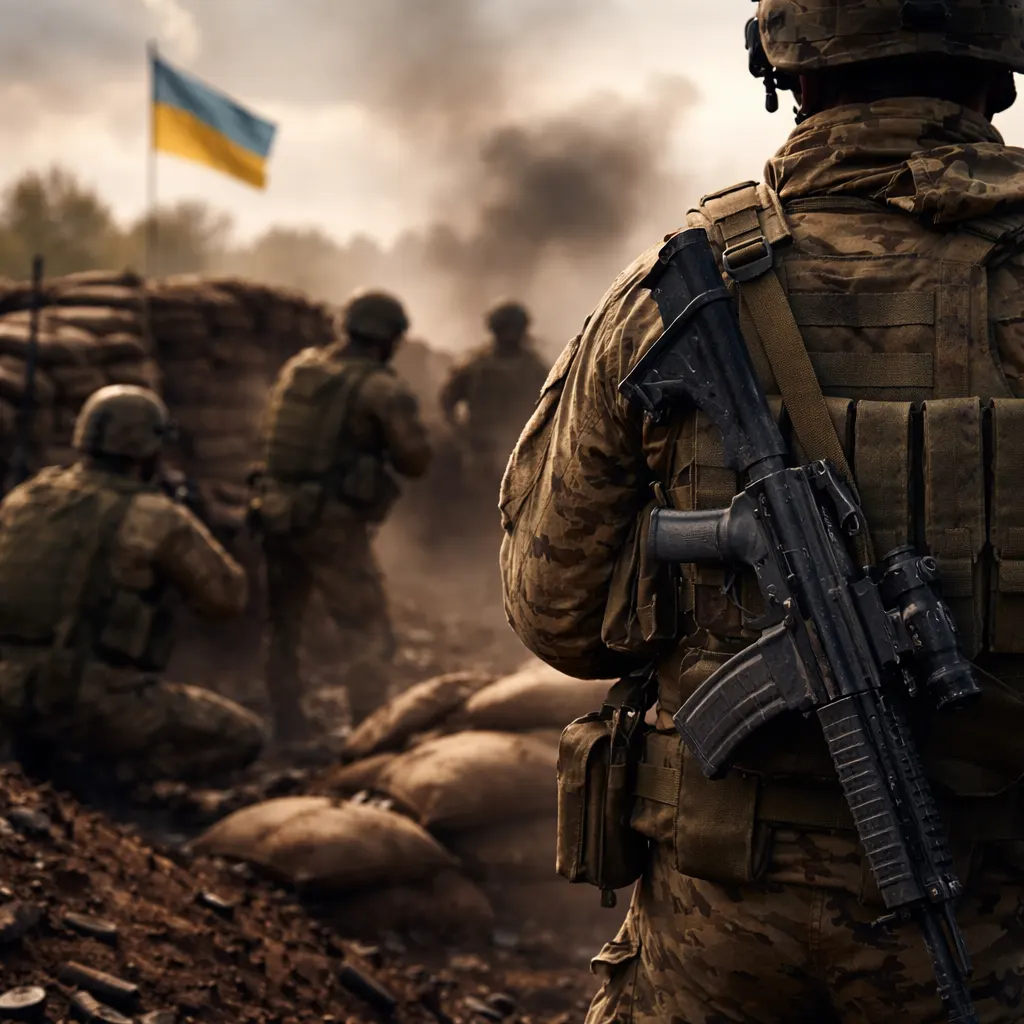
Ukrainian forces have successfully contested the initiative at both strategic and operational levels for the first time since the August 2024 Kursk Offensive, according to a September 12, 2026 assessment published by the Institute for the Study of War. Ukrainian troops have held Russian forces to near-zero net territorial gains since March 2026 and conducted successful counterattacks in the Kupyansk, Oleksandrivka, and Lyman directions. Most significantly, Ukrainian forces have destroyed a major Russian salient north of Lyman that had threatened the northern flank of Slovyansk and the entire Donetsk Oblast Fortress Belt, disrupting Russian plans for a wide encirclement of Ukrainian defensive positions.
The report details how Ukrainian successes in eliminating the Russian salient north of Lyman over recent months have forced Russian commanders to reassess their campaign strategy. Russian forces had been attempting a two-pronged encirclement of the Fortress Belt—advancing from the north through Lyman and from the southwest through the Pokrovsk-Dobropillya sector toward areas west of Druzhkivka and Kramatorsk. Ukrainian counterattacks defeated Russian efforts to push into Dnipropetrovsk Oblast, regained lost ground around Kupyansk, and have now largely pushed Russian forces back to the Zherebets River in the Lyman area. Russian milbloggers acknowledged between September 9 and 12 that Ukrainian forces had effectively cut the salient and that fighting was mainly ongoing along the river. Elements of Russia's 25th Combined Arms Army and 20th Combined Arms Army have been engaged in the Lyman area, though the full extent of damage to these formations remains unclear.
Russian generals have reportedly asked President Vladimir Putin for an additional 800,000 troops to sustain and expand offensive operations in the face of enormous casualty rates, according to Ukrainian intelligence cited in the assessment. Ukraine's Main Military Intelligence Directorate Head Lieutenant General Oleh Ivashchenko stated that Russia's current casualty rate exceeds its daily recruitment rate of 1,000 to 1,200 people, with about 60 percent of casualties being killed in action—an extraordinarily high ratio when the standard ratio in modern war is one killed to three wounded. Ukrainian General Staff data shows Russian forces suffered an average of 1,374 casualties per day since the beginning of July 2026. The report notes that Russia doesn't have the training and administrative capabilities to absorb, integrate, and train 800,000 recruits at one time, particularly alongside the semi-annual conscription cycle that normally starts in October.
The assessment explains that Putin is more likely to choose a gradual and covert mobilization than to order a sudden, massive involuntary reserve call-up like the one in 2022, due to constraints in Russia's training and bureaucratic capabilities and concerns about public reception. Russian forces are already suffering from administrative and training bottlenecks for ground forces and drone operators at their current recruitment rate, and mobilizing hundreds of thousands of additional recruits would almost certainly worsen those challenges. The Russian General Staff likely wants to use the additional troops to implement offensive plans throughout the entire front rather than only in Donetsk, possibly including operations in the Chernihiv-Kyiv direction aimed at extending the front line and exploiting Ukraine's manpower limitations. It remains unclear how such a mobilization, if Putin actually orders it, will change battlefield dynamics given Ukraine's current advantages in tactical and operational drone operations and drone-infantry integration.
The report concludes that increasing Russian casualty rates and declining recruitment will likely force Russia to conduct some form of mobilization in the near term, but the type and scope remain uncertain. Any compulsory mobilization is a personal decision for Putin, contingent on his perception of battlefield realities and regime stability. Meanwhile, Ukraine's ongoing long-range strike campaign and Western sanctions are actively preventing the Russian oil industry from recovering its processing capacity, with the International Energy Agency reporting a 30 percent decrease from pre-2022 levels. The situation remains dynamic, with Russian commanders pressing for resources even as Ukrainian forces maintain the initiative they've held since late 2025.