
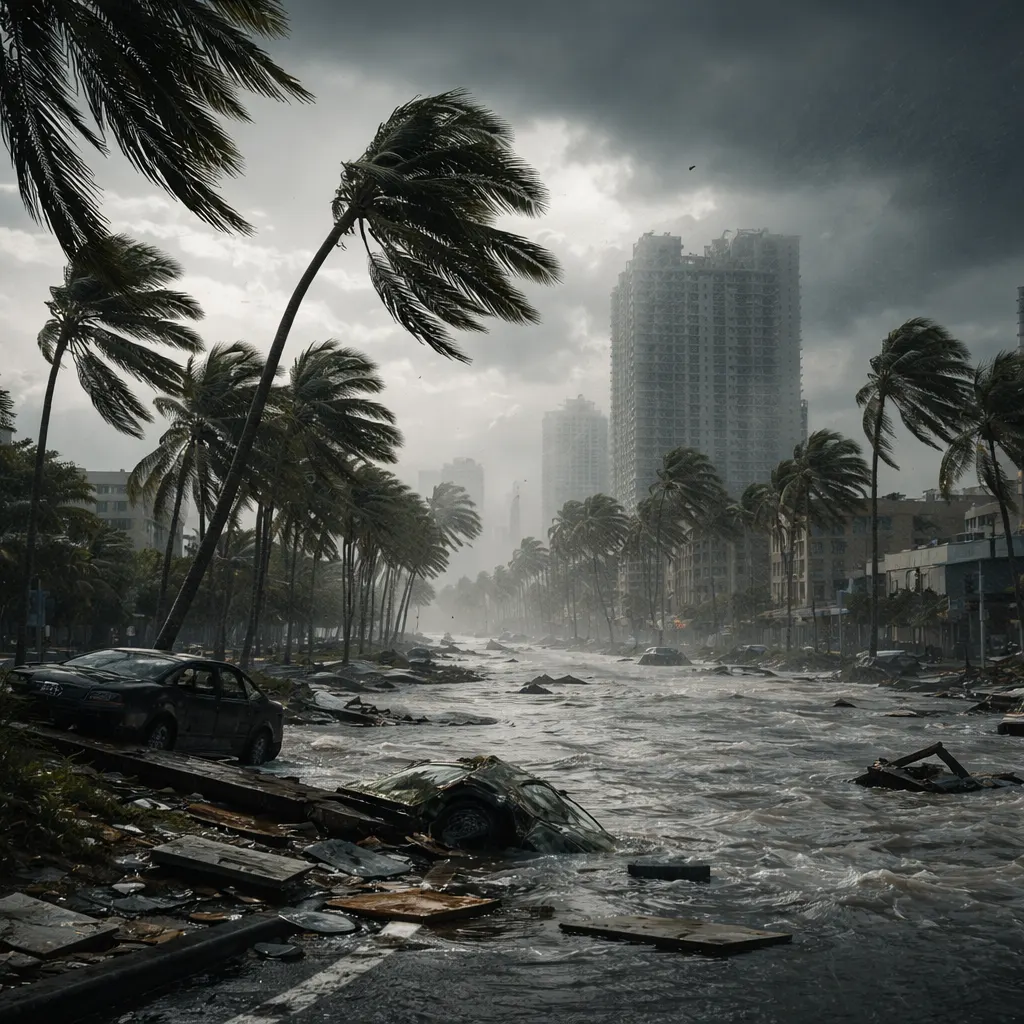
A hurricane striking Miami similar to the catastrophic 1926 Great Miami Hurricane would cause more than $280 billion in total damage, potentially making it the costliest weather disaster in world history, according to a September 2026 report published by Yale Climate Connections. That figure exceeds the $213 billion cost of Hurricane Katrina in 2005, currently the most expensive weather catastrophe on record. The estimate comes from catastrophe modeling conducted by Verisk Catastrophe and Risk Solutions, one of four groups that have calculated damage scenarios for a repeat storm hitting South Florida's heavily developed coastline.
Miami-Dade County's population has grown by a factor of about 23 since the 1926 hurricane, rising from 100,000 to roughly 2.3 million, while the number of housing units increased by a factor of approximately 41, the report states. Verisk's catastrophe model estimates the historical storm would generate $230 billion in gross insured losses if it occurred today, with over $220 billion of those losses in Florida alone, plus an additional $50 billion in uninsured damage that could have been covered by private insurance. The original 1926 hurricane caused $105 million in damage in 1926 dollars, equivalent to $2 billion today. Sea levels at the Miami tide gauge have risen 1.12 feet since 1931, and peak water levels in Biscayne Bay would be roughly 12 to 16 inches higher than in 1926 during a repeat storm, according to Verisk's simulations.
The report finds that the Verisk model assigns this level of hurricane damage "about a 1% annual occurrence probability for Florida (a one-in-100-year hurricane)," meaning there's a 26% chance of such a storm occurring in a 30-year period. Dr. Sylvie Lorsolo, Director of hurricane winds and storm surge modeling at Verisk, explained that the 1926 sea level simulation produced minor flooding along the Biscayne Bay coastline, while the projected sea level simulation showed localized increases in inundation, "most visibly on Key Biscayne and along the inland waterways." Three other catastrophe modeling firms have published similar estimates: a 2026 academic study calculated $218 billion in South Florida damage for a 2023 scenario, Moody's modeled $232 billion in total losses from a Category 5 hurricane in 2025, and Karen Clark & Co. found $200 billion in insured residential property losses alone in 2019.
Climate change has intensified the threat through multiple pathways that weren't present in 1926, the report explains. Rising sea levels mean storm surge now starts from a higher baseline, and the interaction of surge with coastal cities is "a game of inches and thresholds" — once water crosses the base height designed to withstand a one-in-100-year event, every additional inch can flood vast areas. Just one inch of water in a 2,500-square-foot home can cause $27,000 in damage, while 12 inches can cause $72,000. Modern hurricanes also tend to be wetter because a warmer atmosphere holds more water vapor, and they're moving more slowly over land, which increases rainfall. When heavier rains meet higher sea levels, the risk of compound flooding rises drastically, as Hurricane Harvey demonstrated in Texas. The report notes that as much as $8.1 billion of Hurricane Sandy's $62.5 billion in damage resulted from just 3.8 inches of sea level rise caused by human-driven climate change.
A $280-billion-plus disaster would likely trigger cascading economic failures across Florida and possibly the nation, the report warns. Moody's estimated that insurance premiums could increase 60% above recent prices in the five years following a Category 5 Miami hurricane, and nearly triple by 2036, making homeownership unaffordable for many and spiking mortgage defaults. The real estate downturn would severely stress municipal bond markets, since cities and states finance operations through property taxes — a risk "particularly acute in Florida, which has no state income tax." Moody's projects a population decline of seven to 20% in Miami over five years following such a storm. A 2025 study found about a 4% annual chance that an extreme Florida hurricane season could cause multi-billion-dollar uninsured losses exceeding 1% of the state's GDP, capable of triggering a severe banking crisis. Unlike the 2008 recession, the report concludes, government intervention couldn't fully solve a hurricane-induced financial crisis, because the underlying causes — more severe hurricanes and rising sea levels from climate change — are only going to get worse.