
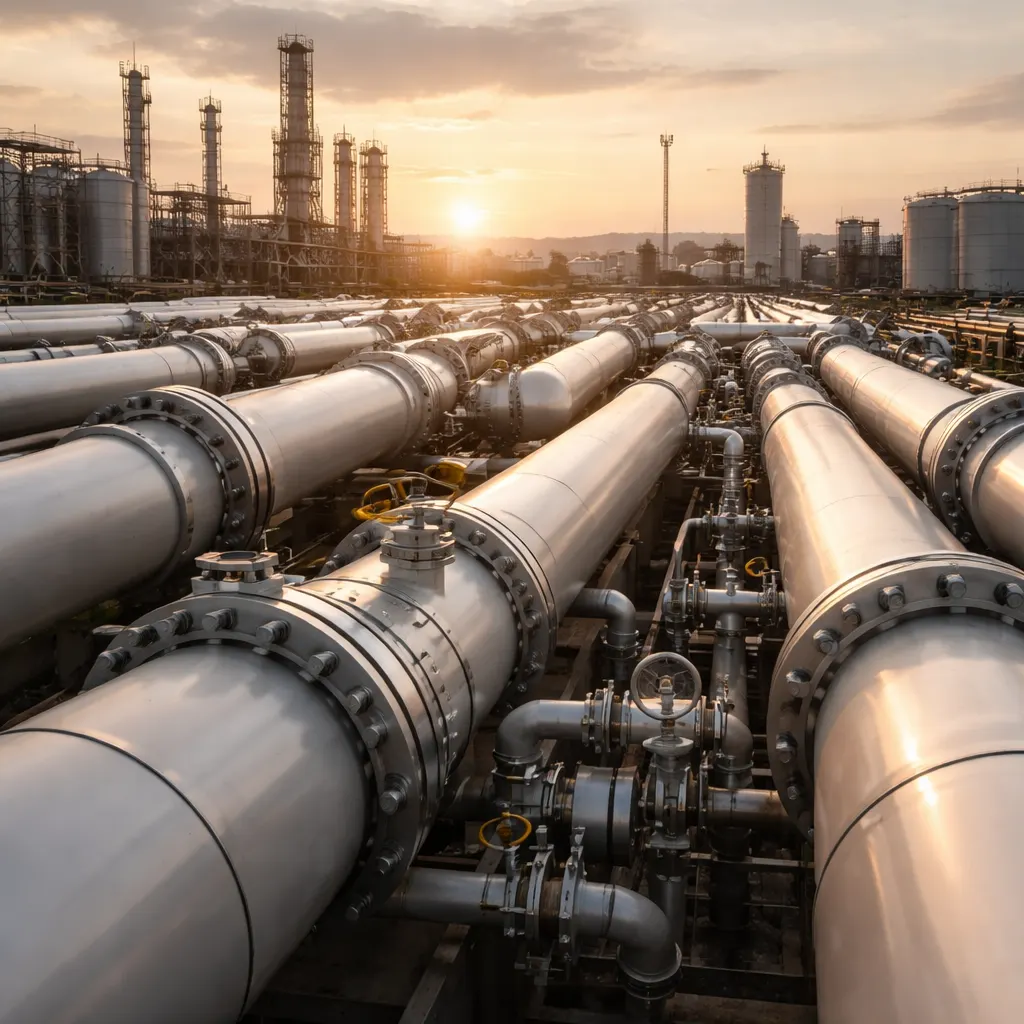
The U.S. completed eight liquid fuels pipeline projects between January 2025 and June 2026, with another 14 new pipeline initiatives announced during the same period, according to the 2026 Liquids Pipeline Projects Database released by the Energy Information Administration on August 26, 2026. The database tracks crude oil, natural gas liquids, and petroleum product pipelines across the country. The wave of completions and announcements reflects continuing infrastructure development in the nation's energy transport network.
Among the finished projects, Enterprise's Bahia Pipeline stands out as the largest, spanning 550 miles with capacity to move 600,000 barrels daily of natural gas liquids from West Texas's Delaware and Midland basins to Enterprise's fractionation facility in Chambers County, Texas. EPIC boosted its Y-grade pipeline capacity by 50,000 barrels per day to reach a total of 225,000 b/d, carrying product from West Texas to Corpus Christi. MPLX expanded its pipeline capacity to 250,000 b/d for Y-grade moving from the Delaware and Midland basins to a fractionator in Sweeny, Texas. Other completed work includes Kinder Morgan's conversion of the Double H Pipeline system from crude oil to natural gas liquids service, Kinder Morgan's expansion of the Santa Fe Pacific East Line moving gasoline, diesel, and jet fuel from El Paso to Tucson, and Sable Offshore's restart of idle pipelines 901 and 903 in the Santa Ynez system. A converted natural gas line now carries crude oil from the Gray Oak Louise terminal to the Edna terminal with final deliveries to the Seahawk terminal, all within Texas. Enterprise also converted the Seminole Red back to natural gas liquids service after previously switching it to crude oil while constructing the Bahia pipeline.
The newly announced projects include the Bahia Pipeline Expansion, Bayou Bridge Pipeline Expansion, Bridger Pipeline Expansion, and Coastal Bend NGL Pipeline Expansion 2, according to the database. Additional announced initiatives are the Enbridge Mainline Optimization phases one and two, Flanagan South Pipeline Expansion, Puget Sound Pipeline Optimization, Santa Fe Pacific Pipeline East Line Expansion 2, Southern Illinois Connector, Sun Belt Connector, Western Gateway Pipeline, and Western Markets Pipeline Expansion phases one and two. The report notes that its Liquids Pipeline Projects Database compiles information on more than 280 future, ongoing, and past pipeline projects dating back to 2010, covering project types, start dates, capacity, mileage, geographic details, and project status.
The database draws from pipeline company websites, trade press coverage, and government documents including U.S. Department of State permits for border crossings, the EIA explains. The information represents reported plans rather than data collected through mandatory surveys, and the agency doesn't make assumptions about how likely projects are to finish or when they'll be completed. Because some pipelines function as segments of longer lines carrying the same fuels to final destinations, adding up all project capacities would double-count certain pipeline capacity and overestimate total infrastructure. The database works alongside the agency's Natural Gas Pipeline Projects tracker to provide a comprehensive view of the nation's energy transport infrastructure development.