
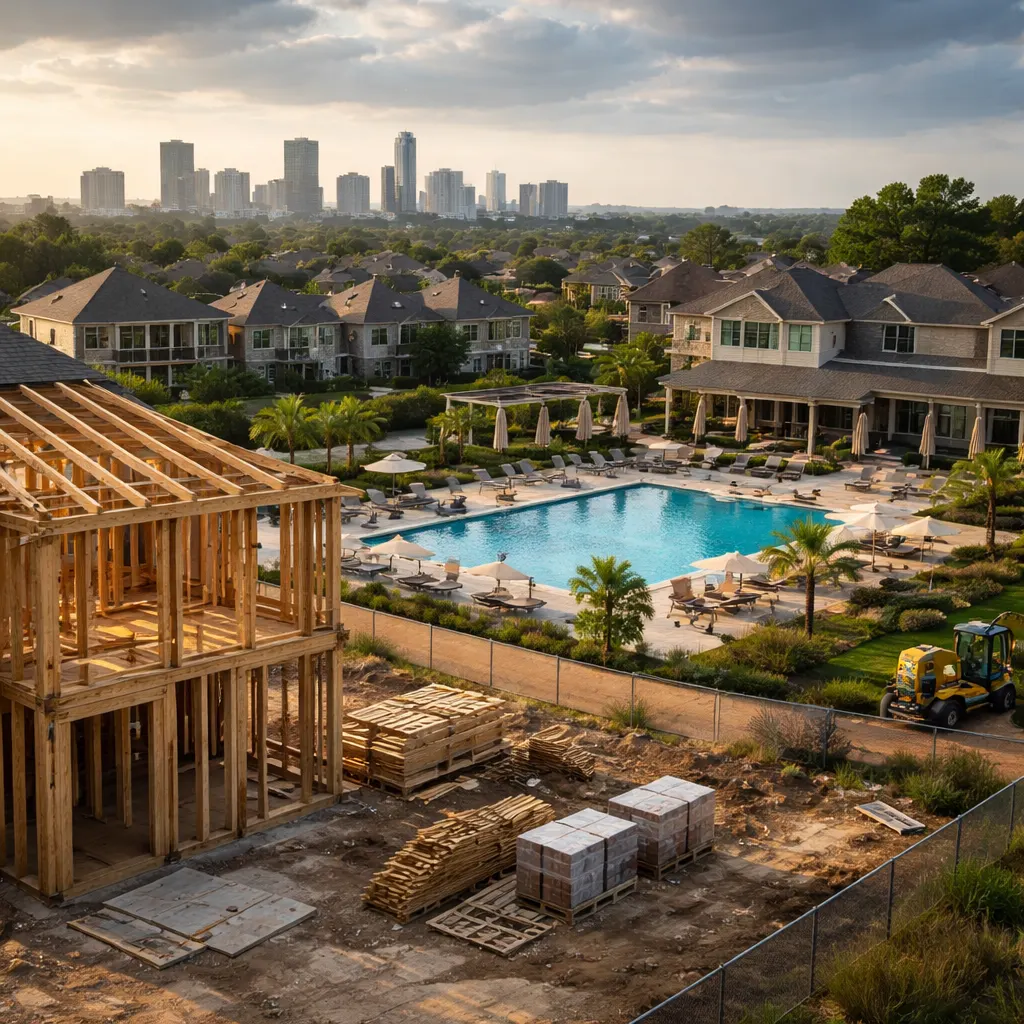
Several North Texas cities are undermining a state law designed to boost housing supply by imposing requirements like Olympic-size swimming pools, rooftop lounges, and saunas exclusively on developments enabled by the reform, according to a report published by the Texas Public Policy Foundation. The analysis finds that Arlington, Frisco, Irving, and Plano have enacted "poison pill" regulations that apply extra burdens almost solely to projects unlocked by Senate Bill 840, a 2023 law requiring larger cities to permit townhomes and multifamily housing by right in commercial zones. The report concludes these targeted rules are designed to make state-authorized housing economically unworkable, threatening affordability gains in a state facing a shortage exceeding 300,000 homes.
The report documents a range of costly mandates layered onto SB 840-enabled projects but not applied to other developments in identical zones. These include mandatory minimum building heights that effectively ban garden-style apartment complexes, public art requirements costing hundreds of thousands of dollars, building caps, enhanced parking mandates, and unit-mix quotas. Frisco has permitted "heavy industrial" uses by special permit in commercial districts, an apparent attempt to create an exemption from the law's requirements. Despite these obstacles, testimony before the Texas House's Committee on Land & Resource Management in July estimated SB 840 has unlocked roughly 8,400 housing units statewide. The Houston metro area added more new residents than any other region between July 2024 and July 2025, pushing its population to 7.9 million, and the report notes Pearland will likely exceed 150,000 residents by the next census, triggering SB 840's requirements and already sparking local resistance.
"It's clearly designed to thwart what we were trying to do," Rep. Gary Gates, the committee chairman, said of the costly mandates following the July hearing. The report argues these aren't neutral standards applied evenly across all projects but selective obstacles crafted to frustrate legislative intent. According to the authors, first-time homebuyer participation sits near an all-time low, and the statewide housing gap applies upward pressure on rents and prices in ways that squeeze working households, young families, and seniors looking to downsize.
The authors explain that SB 840 aims to cut red tape and unlock infill housing where infrastructure already exists, converting underused commercial space into residential units without forcing sprawl. The report notes similar reforms in Florida, Montana, Rhode Island, Wisconsin, Minnesota, and Virginia have shown that such measures lead to more construction, stabilize and slow rent growth, support walkable neighborhoods, and generate additional tax revenue. When cities undermine these changes, the report finds, the market loses increased supply, lower prices, and greater choice—the predictable result being fewer homes built and sustained upward pressure on housing costs. The law received broad support in both chambers of the Texas Legislature and backing from more than seven in ten Texans across the political spectrum.
The report recommends city officials welcome the new housing and tax base these reforms promise rather than resist them through punitive treatment that risks legal invalidation. Cities retain authority to enforce reasonable, generally applicable health and safety rules, the authors note, but may not single out certain projects for burdens that effectively nullify legislative goals. The report frames SB 840 as a supply-side reform designed to help nurses, teachers, and firefighters live in the communities they serve, and warns that as more Houston-area cities reach the population threshold, residents will face either opportunity or scarcity depending on local compliance. The bottom line: activist local governments blocking state housing reforms deprive Texans of affordability gains the market would otherwise deliver.